Stinging Nettles used as Rennet-Round two

Ok, so got a little knitting in last night, always gives me time to reflect, and hit the books on the shelf, first six that I was sure had info on nettles did but just like everything else I was reading said, Salty Nettle Juice, seventh book, with writing in the front that says Happy 29th B-day from my momma, Man, does my mom give me the best books!

Had a three area’s that talks about nettles, and finally a qoute on the percents, its enough to me make go HUH.. according to the book, you need to go with 2 parts salt to 3 parts strong nettle tea, that is alot of salt, if you ask me, and takes the idea of this being cheaper or more local right out the window.. but it puts me back to the drawing board on giving this a try for making a feta style cheese.

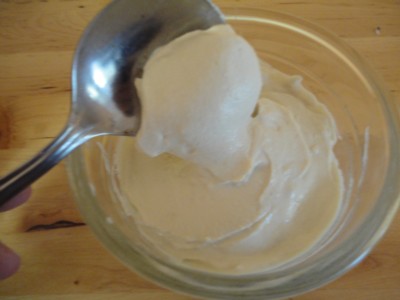
On the other hand my soft farmers style cream cheese has set up beautifully overnight and is ready for use today, Here it is.

DH likes it, says its got lovely depth of flavor and a great tangy bite to it, and thinks while you would not want to just eat it on its own, would be good in sandwhichs, or in different meal idea’s.. I think it would be great in a veggie dip, or as part of a salad dressing as well.

But decided that it would be amazing in a stuffed homemade pasta dish, or homemade porogies, and given that I have new potato’s and onions/garlic sitting in the garden, I decided that porogies it is.

Posted in 100 mile diet, Food Production and Recipes | Tagged , , , , | 1 Comment

Stinging Nettle Sheep Cheese Recipe

Lets just play what if,  What if you can’t get Rennet? What if you can’t get Lemon Juice(after all this is Canada, lemons don’t grow here)

What does grow in most parts of Canada that can be used in place.. The amazingly useful, ever so healthy Stinging Nettle..  In the book, on the net, and in the medival write ups, The Juice of the nettle or a Decoction formed by boiling the leaves in a strong solution of salt will curdle milk providing the cheese-maker with a good substitute for rennet.

Right now in my garden, I have many cucumbers, fresh cherry tomato’s, herbs and peppers ready, do you see where this is heading.. O that’s right folks.. we are going to make Feta so we can make kickbutt proper greek salads.

So lets start the journey together.. Its worth noting that in order to be called Feta cheese it really needed to be at least 70 percent sheep milk.

During morning chores, milk the sheep, goat or cow..  Don’t have a barn or a milking animal, huh…. ok go buy whole milk, or even better got a source for raw whole milk? (make sure its legal in your state or province to get raw milk)

Then head out to your trusty patch of stinging nettles growing on one edge of your compost pile, I trust you have been eating some as greens, drying lots for winter use and animal feed, plus making amazing liquid plant food for the garden at times? I like to take the top four to six inches off the plants, if you pick for most of the season, they don’t tend to go to bloom much at all, , pick a full 8 cups metal pot stuffed full, you want leaves and their stems.. bring them in, give a rinse, pick off any damaged leaves and put two cups of water,  three heaping tbsp of canning salt and stuff the leaves and stems back in and put on med heat, they will wilt right down and all will be under water at that point, give them a good bruising with a big old wooden spoon and put them to simmering. We are going to reduce the water by half to about a cup of very strong salted Nettle Decoction for use in our cheese making process.

Now, if you have a cow, you are milking out gallons a day, if you have a freshened goat, you might get a gallon a day but with a sheep and on the end of the lactaction cycle, I am getting more like a liter a day, so that is what we are making, a liter of sheep’s milk into a nice little portion of feta. Now it is worth noting that sheeps milk does in fact have a higher count of proteins for cheese makings so in the end you get more product from the sheep milk compared to cow or goat milk per liter (just pointing this out, that it depends on a few things in regards to how much cheese you are going to get)

So I follow my normal process of carefully heating my milk, and added in my cooled very strong salty nettle juice and waited, and waited and waited……….

And waited…………

And finally after hours I have Soft Cream style cheese!, Nettle Flavoured Salty Creamy  Cheese..

Now I like Cream Cheese, I do, and I even like the flavor nettles can bring to cheese, I have used them as a dried herb when I am planning on making soft farmers cheese.. BUT I followed the recipe given in the nettle book to make a hard cheese that would break into cheese curds. So is the recipe wrong, or did I do something wrong? Honestly not sure, got a good amount of nice whey for baking bread with, got a good portion of soft farmers cheese for some use, will figure it out.

And that is the difference between reading it and doing it, the figuring, the flops, the what the @%^&? and how do I fix that, Can I fix it, or is the info wrong, should you only expect soft farmers cheese if using Nettle juice?  I think I would want to add more salt next time.

So I will throw it out there, any of you ever use Nettles as a replacement for Rennet, and if so care to share how much you used, how you make the juice itself, and your portions?

On the flip side, ever tried to make something that the books make out to sound so easy only to find that even if you have skill in the area (I make yogurt, Cottage Cheese, Cream Cheese’s, Farmer Cheeses and Feta using my goat and sheep milk using the typically called for products), that its a good old flop?


Posted in 100 mile diet, Food Production and Recipes, raw milk | Tagged , , , , , , | 5 Comments

Apple -Sumac Jelly Recipe

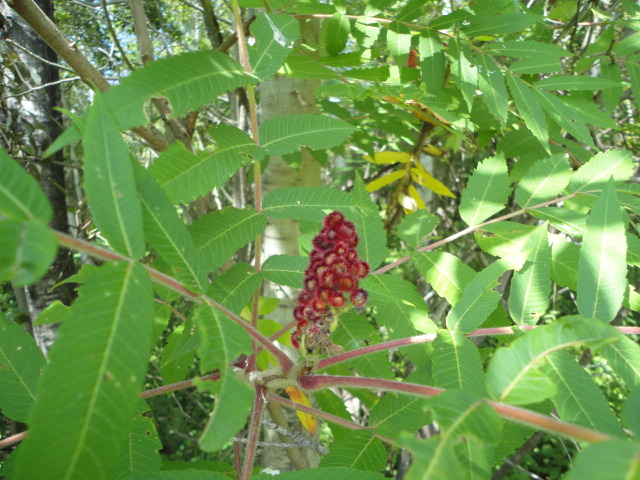
I could not help but notice that driving that the local sumacs are covered with bright red, and as mid-summer is the best picking time, and I just happened to have some wonderful locally ready crabapples (you can use regular as well).

Pick about a dozen or so of the sumac fruit clusters, rinse them off and remove any that are damaged, check for bugs carefully, then cover with at least four cups of water and simmer for ten to twenty min, Allow to cool enough to handle and crush though your food mill and then put though a jelly bag, or just hang a really tight jelly bag over night. In a different pot put crabapples/one cup of whole cranberries, cover with 3 cups of water, cook, then strain though a jelly bag to drip for at least four to six hours.

Take your juices combine together, for a total of right around 7 cups of mixed juices, to which I add six cups of sugar, and 1/4 cups of lemon juice, bring to boil till it reaches gel stage and then skim, bottle and hot water process for ten min..

One of the perks of this jelly is that its all local, the crabs are off the farm, the sumac is down the road and the cranberries are from our local bog about 40 min away, plus I have my own little cranberry area, the second big perk is that its different! you can’t find this flavor combo at the local store or even at the farmers market, at least I have never seen it.

Do you use Sumac to make homemade tea? Do you make Sumac jelly? Got a different recipe that works well? Do you use it for help in tanning hides? The wood is wonderful that way!

Posted in Food Production and Recipes, wild foods | Tagged , | 4 Comments

Freezer Camp

Part of life on the farm is the fact that we are raising a percent of our animals each year for food production. Now the reason I say a percent is that I keep back breeding animals on my little peice of land, and its worth noting that is not always the case, there are lots of folks (even those that sell local farm gate sales) that don’t, they buy their chicks or lambs or calfs etc as newborns or day olds and raise them to butcher size.

Having sent 11 of my sheep off to the local butcher that does them, I will certainly be busy curing meat, making sauage and canning meat when I get them back, I had to make the call this morning to confirm that all of them passed inspection, they did, and to date every sheep I have sent has but then again, I only send sheep that appear in peak condition to me so I am certainly hedging the bet on that one.

There is honestly nothing quite as hard as ending the life of a critter that you have known since the moment of its birth, and I fully realize that there is this huge disconnect between most of the humans in many, many countries between the meat got at the meat counter, in a can or at the local Mc D’s vs what it means to see the whole circle of life to death to butcher to table.

I am not going to put up butchering photos etc, but I am going to talk in detail on a few things.. I have read on a number of blogs about them having their first chickens or XXX, this post is for them or anyone thinking of doing their own butchering. This applies to hunting to a point as well.

So the first thing to do is to look at your critter, today we are going to “butcher” a duck together, so I want to look at your duck, move him around, is he moving freely and in a normal duck mannor (no limping etc) does he look healthy, ok Time to catch your duck, good time to use your handy catching board or a net, your choice, once you have picked up your bird carefully and have it tucked into your arm, look at its eyes, are they clean, look at its nostrals, they are clean, no discharge etc, bill the right color, flip a hand over those breast feathers, they feel like good healthy feathers, have a look at the feet, no lumps, bumps or scales right?!

Ok, first inspection passed, does the bird feel heavy compared to size, it should, it should feel solid to you, now you have a couple choices, some folks use a killing cone, some folks slit the throat and some cut off the head.. your choice, the main purpose to end the animals life while ideally bleeding the animal.  I personally can’t stand the idea of any of my critters being in pain for even one second longer then required, so I am a head off girl and then either hang to bleed out, with body over a 5 gallon bucket for clean up purposes (I want the blood and feathers for my compost pile)

Ok, so now you have a head, blood in a bucket and a body, the head goes to a second bucket (that is going to go to the pig on my farm), now you can wet pick or dry pick your body, or you can skin it.. your choice and depends on how you want to use it?

I don’t do wings, so I am going to take my handy butchering tree pruning hand clippers and snip off the wings and into the pig bucket they go, personally I skin most of my birds, so taking your skinning knife make a cut and follow it up the body, holding your skin to provide a little bit of pressure so that it is easier to cut  and pull away from the body, this works better when the body is still warm, becomes a little more tricky if they cool off first, now back to what this post is really about, I want you to look at that body, is there any bruises on the flesh? Is everything a even clean color?

Now you have cut around the skin flap and you are taking out the guts, it is very important if you are going to home butcher to check everything you can, check the liver, is it normal size, is it healthy looking, should be plump and dark red, check the kidney’s they should look right with a ring of fat on them most likely, Look at the fat in the belly, it should be firm to the touch, compared to store fat.

 Use your eyes, your nose, and your sense of touch when you butcher, check the heart and the lungs as you remove them, save the heart and liver for your own use, and the rest goes into the pig bucket, feet are your choice, you can give them a really good scrub and use them to help make stock, or they can go into the pig bucket your choice.

Now you have a cleaned well rinced bird, and whole or cut into parts it should be going into cold salted water to help cool the body down as rapidly as possable and the salt will help pull blood out, and then into a fridge to mellow for at least 12 to 24 hours before use or freezing.

Just one of the reason’s we self -butcher is to control the process, which means that we can be cleaner and do a better job if we are willing to take the time then you can get done at a big factory, but that has to include taking the time to truly look at your bird or critter when you do the process to make sure that everything about it is in tip-top shape and worthy of your table.

The process of the kill should be something that gives you the twinge, I honestly believe that, it does not matter how many times you pull the trigger or swing the ax, you should have a moment of self-looking, and taking from many cultures, taking a moment in respect for the life that is being given.  Extend that respect to your butchering process, respect for the meat, respect for the fact that it will feed you and your family, and respect for your ability to process the meat itself.  Clean good butchering is a skill, and one that needs to be used to kept up. Its a skill that very few have anymore, have pride in your work and let that show.
 

Posted in Real Life | Tagged , , , , | 7 Comments

Question for you?

I am in the middle of working on a indepth post but for now I have a question for you..

What is on your screen saver right now?

Only fair to tell what is on mine, so here it is, Daryl from the Walking Dead..

What can I say, I like men that are ready for anything and who never give up!

Posted in Life moves on daily | 6 Comments

Plum Recipes including Farmgal’s Plum BBQ

Well got notice friday that my flat of fresh picked yellow plums that were just driven up last night from down in the fruit belt of our province were ready for pick up.. Someone asked me (at Stone House Road blog) what did we do with our plums, so I am going to include a number of my recipes, I make a sweet and a spicy plum sauce out of my wild plums, I make dried plums and plum butter out of my local blue plums, and here is some of the things I make out of my yellow plums..

I got 30 pds of plums to use up in different ways.. The first thing I made was plum syrup for panckaes/waffles, drizzle over icecream, or fruit or over baking, or blushed on as a meat glaze.. take your pick that is the joy of a good fruit syrup, you can do so! many things with it..

This the most basic, receipe, Ten cups chopped cleaned fruit, with pits removed to 4 cup of sugar, with 1/2 cup of lemon juice added.. Cook for 20 min till everything is soft, then blend in the big blender till very smooth, back to a simmer(watch this, at this stage it will easily burn if you don’t) and then into hot jars and into the water bath for 10 min.

Now comes a very old recipe, I found the “bones” of this recipe in a cookbook from the victora times but have played around with it enough to be able to call it Farmgal Fruit BBQ Sauce and its fabulous on lamb or pork! and pretty tasty on chicken as well (does not work with duck), it does go nice in taco’s or mixed in with ground meat/veggies over rice

  • 4 pds of plums-Pitted and in halfs
  • 4 pds of heavy ripe roma Tomatos (or in a pinch, 1 large can of pasta sauce with two cans of tomato paste)
  • 1 bottle of  red wine (the regular size, and I try and go local if I can)
  • 4 cups of chopped red onion
  • 2 cups of dried black currents
  • 1/2 cup of ground pepper (might want to start with 1/4 cup and see if you want more)
  • 2 cup of dark brown sugar (or 1/2 molassies and 2 cup of white sugar), if you want sweeter, add 1/2 cup of brown sugar at a time.
  • salt to taste-I put in about 1/4 of a cup
  • 1 tbsp of cloves (start with 1 tsp and see if you want more)

Ok, so you put your plums, tomato’s and currents in your big jam pot, add your wine, vinager, sugar and spices and simmer boil for 30 to 40 min, then take off heat, allow to cool just slightly and transfer into your blender, blend till smooth, then back into the pot and check your spices, might want to add a touch more pepper, salt etc. Then simmer to till its as thick as you like your BBQ sauce to be, as my tomato’s are for sauce , it only took another 30 min but the more juicy the tomato, the longer this will take, keep your heat low and simmering and dont’ forget to stir fairly often.

This is going to give you a sweet, tangy, fruity and yet a bit zippy BBQ sauce. Processed like normal for a hot water bath process for ten min. Makes 8 pints

So what are you doing with your plums in the kitchen, making a plum cobbler, a plum Pie, Plum Jam, Plum Sauce for dippings or stirfrys, or ?? Got a good one, please share, I can always use another good recipe for this wonderful sweet but tangy fruit!

This is a Homestead Barn Hop Blog

Posted in Canning | Tagged , , , , | 2 Comments

Happy B-day Girl..

My how now brown cow is offically one year old, I can’t believe it really, she is a teenager.. How fast the time has gone, from this as a baby.. I remember when we brought you home, you blinked your big brown eyes to see the sun for the first time, and you didn’t even have the strength to walk to the barn, DH had to carry you to your calf shed and paddock.

Now look at you at a year old out grazing in the pasture, getting your cow thing on!

Her ox training is going well, getting better with age and working.. her first load hauled was a sled full of tools, this summer she got to haul in some hay, once we got the equipment figured out, it went fairly well but I will be happy when she is full grown and DH finished making me my stone boat for moving things around.

Posted in Critters | Tagged , , | 2 Comments

O the Joy’s of a 100 year old farmstead!

There are perks, like the cisterns that came with, the extra wells, one drilled for the barn, plus the underground pipes from the back well to the house, over to the little barn, there are perks in the above average soil quality in many of our pasture area’s from many years of barn compost etc..  Drainage has been done and big old shade tree’s etc.

But this! this was not a joy.. this was a lesson of things that won’t rot, that won’t go away and for heaven sakes, while I know it was popular, burying things does not remove them, they will come back to haunt the owners (which is now us!) I bet a few things ran though you mind on what this item could be.. Did you come up with Binder Twine..

This is what it looks like after many years of the rest of the pile out in the field having composted till its flat.. its like its mushrooming out of the ground itself, only one issue, this is bad for the livestock, it has to go!

We pulled and hanked, and shoveled and finally in the end we took out a full wheelbarrol of tangled up binder twine, it turned out what you could see what the tip of the iceburg so to speak.. we also can’t figure out why its all in one spot.. did they pile it up and then cover it? otherwise, it should have been scattered though.. very odd, but its all cleaned up and thrown away now.. will reseed the area late fall or early spring with pasture seed.

For those that bought older homes, what is some of the strange finds you have come across? And remember folks, if you can, use twine that will rot…

Posted in farm | Tagged | 7 Comments

Well the heat is good for drying the pea’s on the vine

Do you seed save from your garden? If you are thinking about it, I would recommend adding to your book collection Seed to Seed, Seed Saving and Growing Techniques for vegetable Gardeners by Suzanne Ashworth, its a very! good book to have for checking just how to do this or that for each type of seed..

I have been saving seed from my pea’s for a couple years now, I try and save enough seed for the next years planting “just in case” but the rest will in fact be replanted for my fall pea crop. Pea’s have got to one of the easist seed to save, they are can be left on the plants to dry out and dry down, in hot weather, I will let them dry on the plant, checking them daily, I want them dry, brown and rattling, but not quite ready to split and drop the pea’s to the ground, if that happens you waited just a touch to long, however being a pleasing plant, if its wet, you can still take off your fully grown hard and very starchy pea’s, if you bit into one, you want to spit it right back out, its no longer sweet or tasty at that point, but you can then take then and dry them on screens.

Pea’s seeds will retain 50% viability for three years if stored in a cool dry and dark conditions, its worth noting that Federal Germination standard for commercially sold seed is 80 percent, I have found that I have over close to a 100% percent germination if they are dried and then replanted within weeks for the second crop, and around 80 plus present if they are planted the next year, I have thankfully never had it as low as 50 Percent, but I have also not kept seed for up to three years without rotating seed.

Posted in food, Food Production and Recipes | Tagged , , , , , , , , | 2 Comments

Wild Plum crop is slowing coming!

Ok, don’t cheat, please look at the top photo first and see if you can spot the plum bushes, I am certainly hoping that this photo will not give away the location of our favorite area for collecting wild plums, there are close to 20 bushes in this remote green area..

Here is a current shot of the plums, all green and hard and certainly not ready to be picked yet and this years crop is less then last years but still given that its wild free pick food, you take what you can get! and do it with a smile.. Here is a close up of the leaves in case you want to go looking in your own areas.

Posted in wild foods | 1 Comment