Single Draft Cow Training..

Oxen in training..

Ah, I have been trying to spend at least half an hour each day on training girl and in so many ways its showing, the road work is helping harden and work her feet (a very good thing), the steady work each day is making her always willing self even more happy to see me. I am not as happy that most of the gear bought and made for her last year will not fit her this year, I even need a new head peice, thankfully she works just fine on a homemade lucet hand rope, with a instant head halter made as required.

The only two peices that could be made to adjust enough to use in training right now, is her back peice that can have bundles or weights hung on each side, and her bells, so that is what we have been working with at this time, the folks are even getting use to seeing us on the road, but we have hit a training snag..

So right now, I am working on a steady list of commands..

Walk on- Means just what it sounds like

Whoa-Stop

Easy-Slow down but don’t stop

Stand- Don’t move from where I put you.

Gee-Turn right

Haw-Trun left

Back-Back up

She is coming along real well and so I have been starting to walk beside her at rump or behind with her taking her commands by voice only, well the snag is that she has started having a bad habit of going right or left without it being commanded and then gets to the side of the road before the ditch and just stops..sigh..

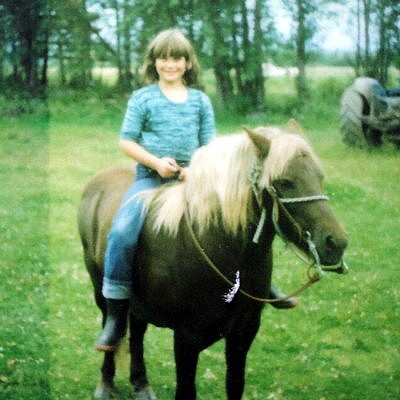
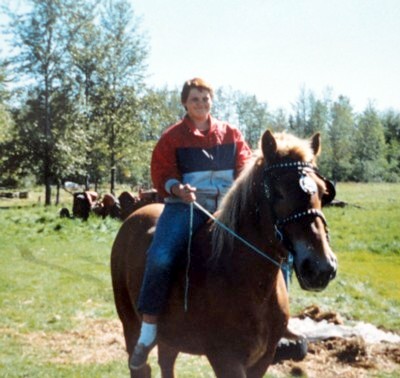
See the issues, first, she should not be turning without command, second, while I don’t want her going into the ditch, she should not be stopping until I tell her to.. if I say.. walk on and that means going down the ditch and up and out the other side, then that is what should happen… I will worry about the second part for another day, I mean she is smart so I can’t really fault her for thinking I would not want her to go down the ditch, I once rode a horse called Blondie for a few summers, and I was warned that she expected you to tell her everything, I thought they were kidding a bit until I was on a road that curved and went right, and she walked right off the road in the straight line I had pointed her at , and down the ditch and stopped in front of the fence, she was honestly a great horse but she expected you to do all the thinking..

So yesterday Girl and I were out for while on the road yesterday and over and over again she would start straight and then slowly go right, I corrected her again, with the New Command “Front”, both of us were getting hot and sweaty, and I had her walk on.. she started going right, and when I said “front” she straightened back out. Now she only did it twice on command in a row, but I stopped right there and let her end on a high note, so we will see today if it stuck or if I am right back to sqaure one.

I think that having a team does make some things easier then working a single draft cow.. So for any of you that drive horses and or oxen.. what is the correct work to walk staight, do you use gee and haw only to correct the behaviour or do you have a “front command” and any tricks to pass on or reason’s you can think of for her to be pulling right or left, she does not do it when I am leading. Will having her hitched to a wagon help increase or decrease this behaviour?

I would like to point out that I have driven teams before but they were in harness, and I am finding it quite different to work with the cow as she does not have driving lines on her at this time, (I did use driving lines last year when I was just starting her) but I want to get her to the point of working off line by voice command. I guess I could put her back on driving lines while teaching the new command or just half on and half off for practise.

Posted in oxen | Tagged | 16 Comments

Food Storage Friday-03-16-2012

Food Storage Friday Report

To be honest it was a slow week, and a bit of a whiny friday to boot.. the weather has hit a unnatural high, typically we are 2 or 3 above and we are well over 20, on sunday we hit plus 26c, and my farm and my head is all in spring.. hubby was working without a shirt, while we are still tromping though snow.. very odd indeed.

All my fruit tree’s made it though the winter, and are all budding out, this is a great danger to my coming food storage and to the possable cost of fruit this year, it is only mid march and if they are budding now, they will most likely bloom early as well, which means all I need is one good spring snow storm or even a hard frost, and my whole hard fruit crops will be done for the year. This happened to us and most everyone in the area two springs around on our grape vines, it really effected the price, those few that had fruit where able to charge up to 5x the norm and if you wanted it, you paid it.

As I said to Dh, its a good thing that the strawberries, rhubarb, rasberries and currents are such faithful producers, we started some of the spring work in the ever growing strawberry patch, looks like I should have about 150 or so plants to move over into the new rows, which in total should give me somewhere between 300 to 350 plants producing this year.

The pantry is holding up very well, while the jars are getting empty, and I would worry that many of the regular items would not (without very careful planning) make it though two garden season’s at this point, I can see that we will have no issue at all it holding us very well until the garden is producing well.

I am however having a issue with my stored flour and as much as I hate the idea of it, I think I am going to need to mix it with water and bake it into bricks and feed it to the chickens, it has gone off, despite being held in the freezers, and I am starting to think that my body is reacting to it, of course my cast iron tummy of a hubby is fine but I am really starting to wonder, I think I am going to go to grinding my own only for what I am using and or just having to cut out all baking/bread that I would need to use it in and see if it makes a difference.

If this is the case, what a waste!

Thank goodness for the amount of whole grains in my storage that are holding up just fine..

I took one of my big blue plastic waterbarrels (safe for food rated) and I placed it on top of a area of good stinging nettle patch and I am pleased to say that its doing it job well, and I have a nettle already a few inches tall, which will be soon finding its way into my fry pan, the daylilies are also starting to come up and I think a good stir-fry with some of their roots sounds lovely..

Posted in farm, Food Storage | Tagged , , , , , , , | 5 Comments

March Challange and Permaculture

March Challange:

Breakfast-Yogurt, canned mixed fruit, walnuts

Lunch-Baked Beans on Bread

Supper-Pasta with roasted Chicken leg in a pasta sauce mixed with yogurt and dried squash.

Dessert- Hot Spiced Roasted Peanuts.

Ok, so lets talk about Permaculture today, the idea as I understand it in a nut shell is work with nature, layer, and layer some more.. follow nature’s rules, instead of trying to bend her to our will..

We all have the image in our heads of a perfect garden, that English garden, that has head gardeners, and under gardeners and is so sweet and perfect that we all drool, we have even seen these places in our garden magazines and on the net.. stunning they are.. and if they rock your world.. go for it.

I garden to fill my belly first and formost, and for pleasure second.. I often wonder if I have it wrong, my grandmother always planted flowers in her garden, not just to help bring in the bee’s but because she loved to have flowers, I remember her giving me my first chick and hen, my first sweet pea’s to plant and grow, she talked about the sweet smell they would give to the garden area, and I still plant them and think of her.. Rasberries always make me remember my grandfather, the many hours of “grandpa” chats that took place in my teens over his rasberry patch, now as a adult, I wish that I had spent more time out there listening and learning and just being with him..

In someways my garden and its many styles almost seems like a revolt in some ways from the way I was raised to garden, but I do believe each has its own place in your yard, don’t tie yourself down, have a raised sqaure foot herb, have a vertial growing space in that spot in the garden, use rocks to raise the temp and create a mini zone for your strawberries, Grow your horseradish in pots on the deck if you want, make narrow beds, make 4 foot wide beds (never bigger if you want to be able to reach the middle) make and use hugelculture and their wood based huge hugelbeets. Use Green covers, use mulch in your pathways, use mulch in your garden, have some area’s that are no till, some that are in fact lightly tilled and have some area’s that are double dug (awesome for potato’s). Try wintersowning, build and use cold frame, consider making a cold hoop house, have at least a few rows worth of row covers, don’t put all your eggs in one basket by this I mean, have many garden spots in your yard, and your farm.

Be wild, got a spot by a building, put down a wood ledge, be it bought or cut, mulch it down, cover with dirt and compost mix and plant it out..  Got a area that the pig rooted out for you to make into a new pasture? Throw a fence around it and put it into sqaush for the season, it will go crazy and produce like mad, when you take it out, frost seed it late winter and you will have pasture the year after..

Know your plants, some will only go down a few inches, some a foot and some three or more, this knowledge will let you know if you can dump a couple shovels of dirt/compost into a tree stump and turn into a working garden spot!

Ok, so tell me some the wild things you do in your gardens, what do you mix and match! What new thing are you going to try this year?

Posted in farm, gardens | Tagged , , , , , , , , , | 1 Comment

March Challange-Frost Seeding

We are coming into our 5th year of frost seeding to improve our pastures, and we can’t speak highly enough of this process.  A little background on our pastures, the call names are, Big Pasture, Little Pasture, Corner Pasture, and the Correl an the stripe. When we moved to the farm, the Big and Little Pasture were being rented out to farmer R, who had put them into hay for dairy, so the last time they were tilled and seeded was in 2004, Farmer R believes in a proving all the helping hands he can get and on our first year, we took off just under 700 square bales at 80 pds per bale.  However, Back Corner, correl and at least half of little pasture and about 1/6th of big pasture was in “native”, I had Farmer R cut it all down and used it for bedding to get it under control.

We have used our animals for grazing and pasture control along with hand digging and hand cutting, we spread well done compost over the pasture from the barn..

We went to our local seed place and explained what we had in terms of soil, and critters and he mixed us a tailored seed mix for our small mixed farm, taking into account what will do well naturally in our area etc.

We tend to frost seed out 25% of the overall pasture area, however the corner and the correl were done different, they were eaten down to nibs, and then were frost seeded all over, then closed off and have very controlled grazing thoughtout the season them, the hay pasture is the same, the area’s that are frost seeded are fenced off and or only have limited grazing on them until the grasses are at least six to eight inches high before the first graze.

We have seen the results of this program in terms of milk yield and also in a increase growth and weight yield for our lambs, as they are grass pasture raised.  We often see in many gardening books that they talk about no till or cover crops in the garden area, very important indeed but give you are going to have grazing critters, please consider putting into a yearly plan for pasture improvement. Your land, Your Pasture and Your Critters will thank you for it..

“Frost seeding is an economical method of improving pasture and hay fields by broadcasting the seed on frozen ground. As the ground freezes and thaws, it opens and closes allowing the seed to be incorporated into the soil. This keeps the seed from germinating until there is a good moisture supply early in the spring. Legumes are the most successful for this system as they tend to be rounded, dense and most importantly, they -germinate at lower temperatures so will begin growth early in the spring. Grasses have not been as successful as they are lighter coloured, less dense thus they sit on top of the ground and wait for warmer temperatures to begin growth. This often coincides with drier weather as well.

The ideal candidate for frost seeding is a pasture field that is “run out”. If you walk across the field and can see bare soil the size of a loonie, then these spots will be good frost seeding sites. A field can be made ready for frost seeding by overgrazing in the fall to weaken the existing plant growth in the spring. This is not necessary but can be helpful in allowing the seeds to make good soil contact.

The addition of legumes to a pasture or hayfield benefits the forage in many ways. The legume is higher in protein and energy at all stages of growth than the existing grasses, so the addition improves the quality of the forage. Legumes are also able to “fix nitrogen” from the air. As their roots rot back naturally they “share” this nitrogen with the surrounding grasses. Nutrient requirements of a legume grass stand are much lower than for a pure grass stand because of this “free” nitrogen.

As we work pasture fields harder, using rotational grazing to keep them vegetative, we are finding that legumes such as trefoil are not Iong lived perennials but rather live 3 – 4 years and reseed easily. If we do not allow them to go to seed, they will thin out of the pasture. It is more economical to frost seed every 3 – 4 years than to set aside a portion of the pasture to allow it to go to seed unless land costs are extremely low. Frost seeding can help to limit the density of legumes such as clovers if they are frost seeded rather than seeded with the original mix. This along with good grazing management will help with bloat control.

Alfalfa will frost seed as well as any other legume, but alfalfa has an autotoxicity which will not allow new alfalfa seed to grow in the presence of a mature alfalfa plant. You will only have one chance to get a successful stand if you are frost seeding into a pure grass stand. For this reason, alfalfa is usually seeded conventionally or no-tilled to produce more consistent results.

You have the choices of conventional reseeding no-tilling, fertilizing or frost seeding forage fields to improve their production. Your goals for the field and the condition of the stand will determine which is best. In hay fields, we generally want an alfalfa grass stand so conventional reseeding or no-tilling, after killing the original stand, are the most effective. Alfalfa stands can be patched by frost seeding red clover into the stand to get one more production year, but this is usually done in the spring when winterkill reduces hay supplies. Fertilizing, can double or triple the production from an existing stand, but keep in mind that it could also do this with a more productive species that you have introduced. If you have an adequate grass stand in a pasture field, then adding a legume by frost seeding will not only add a high quality plant to the stand but will also help to provide nitrogen to the grasses, improving their growth as well.

Frost seeding requires very little equipment. It is often done using an all terrain vehicle (ATV), snowmobile, tractor and spreader or with a hand-held broadcaster. Many custom operators provide these services. Cost per acre is low. This makes it a very attractive alternative for someone who wants to improve a pasture with very low input costs. It also has the added advantage that the pasture will be useable the summer following as there is no need to remove the livestock completely.

The ideal time to frost seed is in the very early spring. The ground should freeze and thaw 2 – 3 times after the seed is broadcast. Another good time is December, after all the growth has stopped for the year. This is an excellent time for areas which normally receive good snow cover and do not experience prolonged January thaws when the seeds could germinate. Too many times fields go from snowbanks to mud in the spring so there is no time to frost seed. Do consider December seeding,. A light skiff of snow will help to show where you have seeded. Tractors with a spinner spreader can often be used at this time, making the job faster and a smoother ride.

Bird’s foot trefoil is Generally used for frost seeding as it is a non-bloating legume that established relatively well. A seeding rate of 5 kg/ha is adequate. The clovers are more aggressive in establishment but do introduce a bloat concern. If you manage your grasses to keep them young and vegetative, this can be reduced. Seeding rates of 1-2 kg/ha are adequate for clovers as they have many seeds per kilogram. There has been some success with perennial ryegrass and orchardgrass but this should be considered more as a last resort. Legumes are about 50-60% effective in establishment and grasses about 20-30% effective when frost seeded. This really means one year of excellent catches, one year of no results, and two years somewhere in between. You will need patience and perseverance when frost seeding. The cost is 25-30% of conventional or no-till seeding so you can afford to frost seed 2 – 3 times to get an acceptable stand. If you do not find this wait acceptable, then you should consider other alternatives. Weather in the spring will determine how successful the frost seeding will be.

Phosphorus does favour new seedling but in a frost seeding situation, where there is so much existing, competition, fertilizing the field will give the advantage to the existing plants. A late summer application of phosphorus and potash would strengthen the root systems of the legumes for the winter.

An early summer grazing can help reduce the competition from existing grasses. If a rotational system is being used, limit the time that the livestock have access to the frost seeded area. Often, in continuous -grazing situations, livestock have overgrazed the area and killed the legume. Watch their habits to see if this is the problem and try to alter their behavior. A minimum of four paddocks will help you to control grazing patterns, which will allow rebuilding of root reserves between grazing periods. The legumes can then establish and be more productive.

Frost seeding is a popular method of improving long term pastures or patching hayfields for one more year of production. It is a cheap but high risk option. Many people will frost seed 25% of their acreage each year so that they are spreading their risk over different years. It takes about two years to see the improvements from trefoil applications so these should be made a year before the existing plants die out. This will continuously maintain a good pasture rather than allowing it to lower its production. Frost seeding is one of the most economical and easy improvements that can be made to a pasture.

Original written by Harry Harricharan and Joan McKinlay.”

http://www.omafra.gov.on.ca/english/crops/facts/98-071.htm

March Challange

Breakfast-Baked Beans

Lunch- 3 hardboiled mashed eggs with mayo, greens on bread

Supper- Chicken leg/thigh baked in my homemade chili sauce, served with cream baked potatos with a side of canned pears.

Extra’s, water and coffee.
Posted in farm | Tagged , , , , , , , | Leave a comment

March Challange and “How much land do you need?”

Breakfasts: Eggs, Toasts, Pancakes, yogurt with fruit and nuts

Lunches: Soups, Stews, Dippy egg on hashbrowns

Suppers: Pancakes, Hard Boiled eggs, Greens, Lamb Stew -Veggie/Barley

Extra’s , Beet Pickles, Bread, Pears, Apple Sauce, Mixed Berries, yogurt, Walnuts, Almonds, Strawberries and Rubarb.

The challange marches on, and I am caught this in this trap of being so busy at the moment, I can’t seem to turn around without seeing something that needs to be worked on and done, its springs fault.. the snow is melting and the work is ramping up.. combine that with the fact that I can’t seem to find the time to sit down and write and it makes for a small AHH moment for farmgal LOL

Something came in my small farm that I found very interesting, did you you know that 80% of the farms around around the world are four to five acres, and has been so for around a thousand years, where as the large farms in N.A. typically 500 plus acres have been around for about 60 to 70 years.  The idea was that in most of the world, those 4 to 5 acres done right are enough to raise for the family and sell for the extra’s required. I would imagine that if you dug deep enough that you would find those folks are living what could only be called a very simple life and not meeting what we consider “typical modern standards” in N.A. 

Still it was a very interesting thought to me, given that I have a very small farm myself, and still feel that I have much land left unused at this time by that I mean that I feel I still have lots of land that could be producing for me and at this time is marginal use at this time.

So how much land really is needed, I have a number of books, homestead on 1/4 a acre, or 1/2 or 1 acre or life on five acres, I must have at least five or more of these books, and they are choke full of very good information, I do think that if you want to do so, that you can turn a typical 1/4 or 1/2 acre into a amazing productive garden with small critters like a few chickens/rabbits etc

There are moments in spring, when I am running to keep up with my pastures and gardens and land, that I think we have more then we need, but those moments are fleeting and I keep poking once a year at least, to the farmer that owns the land, that I would really! like to buy that six plus acres match my own farm, just take it out and down and match it in size to the road etc.. he keeps telling me that the lawyer will cost more then the land, but I am wearing him down.. or at least he seems more open to the idea these days then he did in the first few years we were here..

I think if you want to have the “picture” of what a small farm is.. garden, fruit, pasture, barns and a reasonable amount of critters, you need around that 4 to 5 acres at a min.. Now you will not be able to give yourself that pretty acre lawn, you will need to use the land and use it carefully and well to make it all work but I don’t think you need more then that for a small farm to work..

Having said that, I think that number only holds because of where I live, give me hard bush country and I would want alot more land, at my dad’s place, you would need at least five times more land per head then I do on the land I own now.. 

So let me put it to you.. where you live now, in the climate you have and the land you are on, how much land do you think or believe you would need to grow your own food, and raise enough to make at least a thousand per acre of extra income?

Posted in farm | 7 Comments

Garden Monday- Indepence Day 03-12

I decided to combine the wonderful Independence Day Challange with the once a month garden update for my monday’s main posts.

Plant something: Kale, onions

Harvest something: Everything counts – Sprouts, Eggs, Milk-

Preserve something: Yogurt, Soft Yogurt Cheese, dried some apple sauce into apple leather

Waste not: nothing new here, just regular composting etc.

Want Not: 2 spend day out of 12, all quiet on this front! Picked up metal garbage cans for more feed storage that is mice proof, its been the winter of the mice.

Eat the Food: Missed Food Storage Friday last week, however  its march challange, so everything is coming from the pantry, freezers or the barnyard.

Build community food systems: Nothing.

Skill up: Worked the draft cow, Made cords for my living room curtains, curing meat

The garden is driving me a little crazy as the moment, it feels and even smell’s like spring but its really not, its to early to do many garden things I want to do. The new sump pump is working well, so that is a great thing indeed.

Posted in gardening, gardens | 2 Comments

A little Cow Love…Girl and Marty Photo Update

Well, I had settled myself on the deck with a good book and lap blanket to help keep warm but Girl spotted me and being a very bad cow, broke the gate to get out to come say hi.. so walked her back, and then of course ended up spending some time with her, we had Marty out for some fresh air and sunshine, he just got to play..

Girl got groomed, lifted and cleaned each foot, worked on woo and stands, layed across her back in a stand, and other basic ground work done.. She is a baby no more.. She is cow, here me bellow these days..

On the other hand, Marty who is coming on five months is still very much a baby boy, he is also a little on the slow side, he is not the brightest bulb in the pack if you get my drift LOL Given that he came from the same herd, and is the same mix of breeds, and has been raised in the same way, I am always so surprised to see such a difference in temperment between the two of them.

Posted in Critters | 6 Comments

March Challange-Catch Up on Food..7th-10th

Sorry guys, life had a blip and I am now behind, I will get caught up over the next few days,  lets start with the menu and then I will do posts on gardening as I have time to write over the next little while..

7th though the 10th

Breakfasts – Eggs, sometimes Scrambled, sometimes dippy, sometimes in a omlet, so extra for breakfast include, bread, baking powder biscuits, mushrooms, onions, greens, mozza cheese

Lunchs- Lamb,  Pork, both roasted, Lamb Stew with barley, extra’s at lunch include pickled beets, English Style Bread and Butter pickles, Pickled pumpkin.

Suppers -Meats have included Chicken, Pork and Lamb, the veggies have included pea’s, carrots, squash and pototo’s, gravy on one night. One night there was cream of mushroom soup with chopped meat, onions an mushrooms.

Extra’s-Yogurt, canned fruit, walnuts or almonds, cheese, bread.. Popcorn

Everyone have a great day and thanks for those that wrote me a note privately to see if all was well..


Posted in March Challange | 1 Comment

March Challange 5th- Seeds

Breakfast- Scrambled eggs with onion and cheese

Lunch- Roast lamb, with pickles- noodles with butter/greens

Supper-Yogurt, with strawberries and walnuts

Other-Coffee, Water, Mint Tea, Popcorn, dried apple, dried dates, pickles

http://notdabblinginnormal.wordpress.com/2012/03/06/conspicuous-sustainability/

I always enjoy reading Xan posts, I so often don’t live up to her ideals, and this post was no different for me, I spend way more then 60 a year on plants, seeds etc on my garden, and I even failed on the T-shirt test, two years ago in walmart, out of season, they had long T’s with full arms and high necks in black on for a $1 each and brown sweat pants for $1, I bought all five shirts and all three pants in my sizes. I use them to layer all winter long, the brown pants go under my heavy winter sweats as underwear, and with five of the black warm T’s, I was able to go for a full week between loads with them.

I have cloths overload, I have garden cloths, barn cloths, butcher cloths, town cloths and good dress up cloths, can’t see it changing any time soon, I would feel really odd going to town in my barn cloths..

But lets get back to seeds, I keep back my own seed from the garden and I’m pretty sure that even if I didn’t keep back anything from the garden, I most likely have at least three years worth of seeds in the house for planting my garden, and If I can keep back collected seeds, it would be even more.

So why or why do I spend that money each year in the gardens, I am always buying more fruit bushes, new kinds that come out, adding in more of this or more of that, herbs and organic’s add up fast, and there are so many different things to try new each year, will this one work better for my soil, for my zone, for my heat.. I have had to re-learn planting choices compared to what my folks grew out in alberta.

Then add in the fact that I extend my season’s and do a tone of research into what plants produce what in terms of vit/mineral as I am working hard to keep a healthy balanced diet while trying to grow most of it on the farm. I will end up buying this or that on things I have never even heard of or see before because its said to work well in the spring or hold in the cold frames over the winter, it takes me a season or two or four to figure out some of those plants, the ones that come with no directions are so much fun..

I had one fruit bush that I have moved three times over six years, first time, turns out it does not like wet feet, second time, turns out it does not like heavy feeding.. third time, full sun, poor soil and thick mulch, took off and growing and producing like crazy.. and so the fun goes when it comes to gardening.

So are you frugal in your seeds or do you have a seed collection that fills box’s and baskets and overflows.. do you grow each seed carefully in your sqaure foot method or so you sow whole beds and then thin for salad greens and overseed like our grandparents?


Posted in March Challange | Tagged , , , , , , , | 6 Comments

Garden Monday-Indepence Days

I decided to combine the wonderful Independence Day Challange with the once a month garden update for my monday’s main posts.

Plant something: Wheat for sprouts, radish sprouts, ginger root

Harvest something: Everything counts – Sprouts, Eggs, Milk- New for this week, Duck eggs are starting to arrive!

Preserve something: Yogurt, cheese, pickled eggs,

Waste not:just regular composting and closed loop feeding of scraps to either chickens or pigs.

Want Not: 1 spend day out of 5, all quiet on this front!

Eat the Food: See Food Storage Friday Report as a extra, made bread, made biscuits, cooked off extra meat, made mayo, made dressing, hard boiled eggs, pickled eggs in leftover beet juice, its march challange, so everything is coming from the pantry, freezers or the barnyard.

Build community food systems: Nothing, nada, but I did stop traffic on the road when I worked the cow..and I waved hi at them..

Skill up: Worked the draft animal, woodworking, tracking in snow, composting, breadmaking in regards to no kneed cast iron baking, cheese making, sauage making.

Its been a quiet week is many ways but filled with long hours and hard manual work, the days are passing fast and bed is calling me early, I am in tune at the moment with the light, up when it comes up and down when it goes down.. The whole flow of the farm changes when I am the main one at the helm and can eat when I am hunger, sleep when tired, and still find time to get all the must do things done.. its freeing in its own way!

Posted in gardening | 8 Comments