Finally in our province, this nasty plant the Wild Parsnip was added to our invasive plant lists, both a very good thing (because in some area’s it had gotten so bad that you could not take walks in local nature area’s, without risk of burns from this plant) and a bad thing because in many area’s that had always used ditch cutting to control the plants. They have moved to spraying and sadly the sprays required for this plant are bad for everything else..
My own county so far has not started spraying the ditches, instead they have increased the cuttings from twice a year on the closest ditch line to four times on the inner and twice on the upper ditches. They are trying to keep their timings of the cuttings to prevent the plant from going to seed.
In a number of county’s you can choose to have your ditches not sprayed but you must sign paperwork that you are “adopting” that section of the road ditches and you must keep it clean and they will check up on it X amount of times per year an or if anyone call’s it in.
The local farmers who spray, will spray and the local farmers that don’t.. well.. they had better start doing something, or they will start being fined.
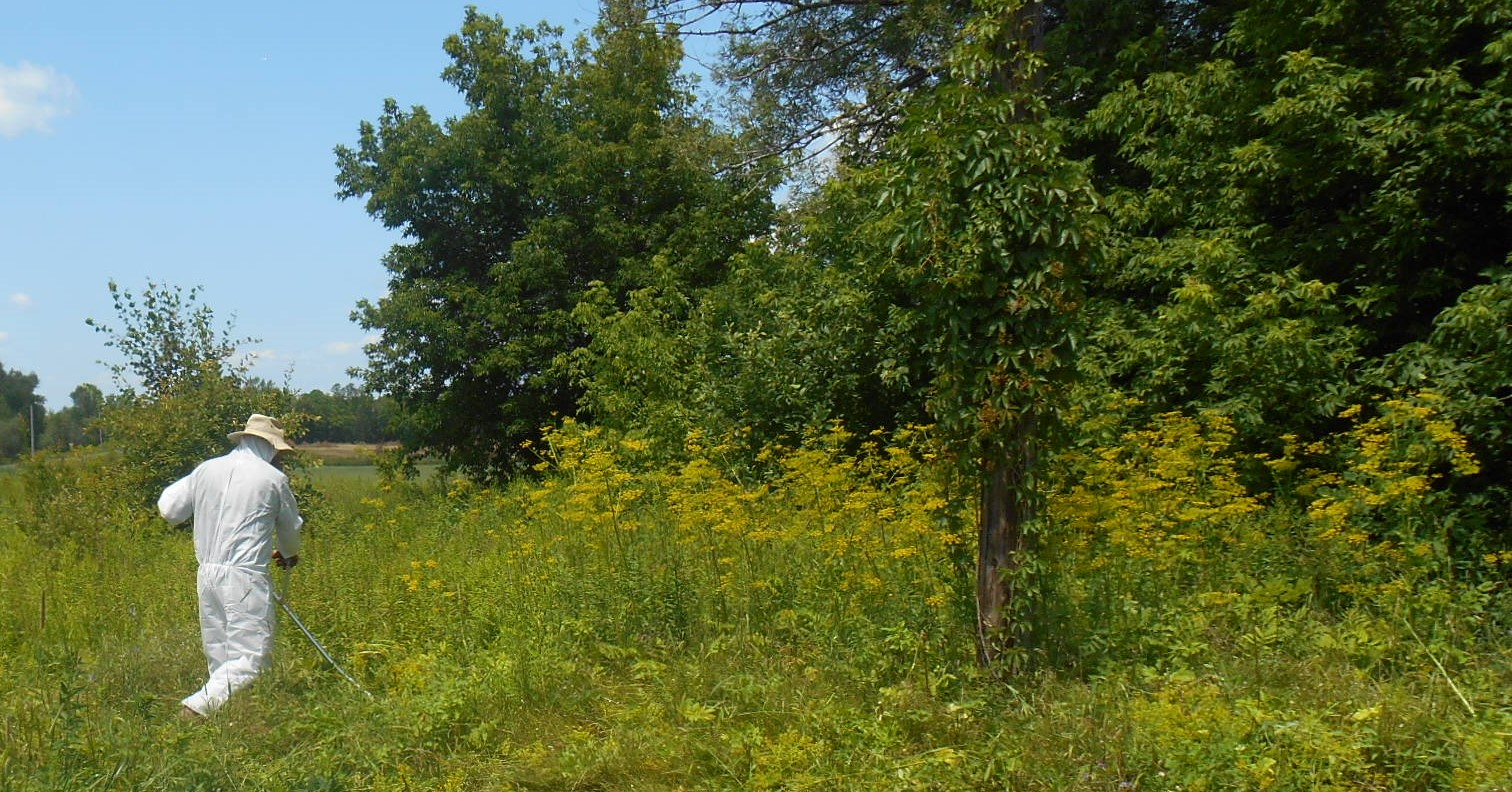
As for ourselves, we “knock” on woods have seen a huge improvement in the number on our place, The key is to understand this plant.. and hit it two-fold. When we had large area’s to take back control, we waited till it was at full height and in full bloom and we cut it down, bagged it and cooked it in the sun and then composted it per the rule of our county. How I wish I could just burn it but that is not recommended at all.
In the spring or early summer if its a nice overcast day (like today) you head out with your safety gear, shovel and extra thick garbage bag and you pull out-dig out all the plants you can find both first year and second. This is without a doubt the best investment in regards to time and effort.. its so worth it. Its the least dangerous because it is mainly handling the roots and gets it out when the tops are just a bit up and therefor greatly reduces the chance for your to get the sap on yourself.
We now have whole sections of the yards, side yards and of course the pastures that are “wild parsnip” free. This has been a many year effort to get to this point.
The second one is the fact that we have a wilder area on the farm, its typically a low -no mow area, its a no-till area and its a lot harder to control the parsnip out there.. we keep taking out plants each year but we always miss some here and there..
The key to these ones is to head out at the right time and with gloves, cutters and a bag, snip off the flowers bundles, and there for remove the seeds before they can be formed or dropped.. Its better to let these second year plants just grow up and flower and then take the flowers off.. they will naturally die back and not come back as a bi-annual plant.
Again this removes cutting or dealing with the sap on the plants, and it removes the issue of cutting them down with the mower, which means that they will grow back and flower at 2-3 inch to 6 to 8 inch heights and I will miss them in my clean up and even though they only get one cluster to seed.. it means more work in the end.. better to let them get tall and easy to spot and deal with.










 Just another Day on the Farm