Salsa -End of garden harvest goodies :)


With the frost warnings, I said to hubby, better pick the peppers and so this big bowlful came in, as did tomatoes. I have been keeping up pretty well on the tomato’s for sauce making so I went.. Salsa!!!

Equal parts prepped diced peppers and Roma tomatoes with half the same amount of diced onion. I fall harvested grated horse-radish root, salt, black pepper, a tsp of keen mustard powder and vinegar

I did a tea baller full of pickling spice, I love my steel bags so much compared to cheese cloth, such a better reuse item in my canning.

Cook for 30 to 40 minutes and then into hot cleaned and prepped canning jars and 15 min in water bath..  Fresh yummy salsa for winter..

Dear hubby does not like “hot pepper heat much” so the mild heat in this salsa comes from the black pepper, horse-radish and keen mustard power 🙂 its zippy just in a different way 🙂


Posted in Canning | Tagged , , , , | 6 Comments

Permaculture Hedge Row Garden Overview 2018

Spring build this year 2018..  the link in blue will take you to the blog post that is talking about putting this bed together. The video above is once it was fully planted out with the pre-started plants.

This one is eight weeks later after the first video above, you can see the crazy growth on this bed. We were already starting to get peppers, fresh eating ground cherries and squash, along with cut and drop comfrey.

This video is the fall one, it is pretty close to another eight weeks to the day to the mid-summer one, the bed is overflowing, the yields have been very good. We were under warning of a hard frost on the weekend but it did not happen.  Forgive my moment of not being able to think of powdery mildew LOL just laugh with me..

We only watered this bed twice in the whole year, we had drought, high heat, crazy high winds, early frosts and it just keeps on trucking and producing. What do you guys think of it so far?


Posted in Life moves on daily | Tagged , , | 7 Comments

King Ram 2018

Sometimes we make choices that we regret to a point, I like King my new ram, he is a good boy, but I miss both Horny and Whiskey. I should have kept them for more years.  I liked that both of them sheer out their wool coats on their own, where King lets some go on his back but still needs to be sheared on his sides and front.  Whiskey was a total suck and loved his cookies so was so easy to catch.. King is respectful but he is not friendly.  Makes catching him a lot harder. I need to get a collar on him to help as he is a VERY large male.

This year is our first year with him as a new flock ram and he gets high points for easy of lamb to be delivered, he gets high points for strong active lambs, great growth rates, good depth of loin and nice meaty rear’s on his babies.  I am greatly looking forward to see what he passes on in terms of milky traits.

Over the past week, I have seen three ewes breed by King and I will mark it down on the calendar.  I did not see any breeding in Aug, so that puts my first lambs due in Feb, unless someone slipped in there last month that I didn’t see.. its possible..

However I am leery on this.. you see on average in a rough way, sperm is started being made about 3 months before its needed, and when sperm in pretty much any stage is over heated, it goes.. NOPE and that’s just that..  If it’s overheated by a mear 4 degree’s compared to normal, you will have a run of sperm that is Blanks.. the boy’s are breeding, but they are not swimming.

So the question for me is this? was Kings low hanging boys in our major extended heat waves in Late June/ July/Aug going to have an effect on his boys. These times were hot enough that it was clearly stressing the sheep, they hide in the shade, they panted and they dug into the soil to lay on it in shade, they hide in the barn during the worst of it etc.

I am not sure that I am going to have good sperm till late Oct or early Nov given the year we have had.  The only way to even have an idea on if I am right is to watch the girls, I have the three females that are in heat and have been breed marked down and if they cycle again in another 21 days give or take.. then they didn’t catch and they are all proven healthy mature females that normally catch well.

I know that the heat has effected the fertile rates of my eggs and my hatching rates from my different fowl over the summer. I certainly did not want or need more babies hatched. I have lots of babies as it is.. however that does not change the fact that there is a noticeable different in our hatch rate with the heat waves.

We will see how it goes.. but if I am right.. Then my girls will most likely catch late and be lambing in April 2019. Time will give me the answer.  Have you seen fertile rates being effected by higher than normal temps?


Posted in sheep | Tagged , , | 2 Comments

Ottawa Tornado EF-2 Storm 2018


A tornado ripped through parts of the Ottawa-Gatineau area Friday afternoon leaving two people in critical condition and more than 170,000 people without power across the region.

The twister touched down in Dunrobin — a rural community in Ottawa’s west end, where multiple homes were severely damaged — before heading east across the Ottawa River toward Gatineau Park, according to Environment Canada

https://www.cbc.ca/news/canada/ottawa/ottawa-gatineau-tornado-1.4834216

Muglia said however, the damage is serious, nearly as bad as the 1998 ice storm.

“This is the worst storm that we have dealt with in the history of Ottawa … at least since 1998.”

The storm “tracked for quite a significant distance,” said Peter Kimbell, a warning preparedness meteorologist with Environment Canada.

“We know for sure that there was a tornado in Gatineau because we have colleagues of mine who actually saw it.”

Based on damage reports, the tornado was likely an EF-2, which have sustained winds from 179 to 218 km/h, he said.

Dear Hubby had a late meeting on Friday and was on the last bus for commute home, he snapped a photo of the sky and storm moving his way, he quote said, wanted to show me the dark area of the sky, once home and blown up, he in fact took picture of the tornado moving forward west to east in direction, while he was located to the south.

I was nervous waiting for news and was so glad when he pulled in the drive, we got winds and so very minor damage, my heart goes out to those that were in the tornado’s path. 100,000’s of folks without power.

this is climate change in action, we are going to see more and more extreme weather events. Thankfully my friends in the dunrobin area were missed but so many others had damage, had a friend on the Quebec side who was missed by a mear 500 feet in the path and lots more with minor damage..

Posted in At the kitchen table | 10 Comments

Pumpkin Pie Seed Saving


I often save seed from a number of plants in my garden. There are plants that I do not save seed from. An example would be carrots, I do not save carrot seed for a few reason’s, I have wild carrot (queens anne’s Lace) on the farm that it would cross with. I also do not want to overwinter enough carrots to keep my population breeding gene health, nor do I want to give up that much space in my cold cellar to keep carrots that are not going to be eaten as carrots are a bi-annual seed plant.

Some plants are very easy to keep seed back from.. Pea’s and Beans are some of the best starter seed keeping plants..

Squash and or pumpkins fall somewhere in the middle.. They seem like an easy plant to harvest seeds from.  Get ripe squash or pumpkin, cut carefully, split open and take out the seeds, wash/dry them and use the next year..  See simple right?

Lets do that one just a touch over..  Did you plant squash or pumpkins in the same gene, because if you did, they can and most likely did cross-pollinate, which means that pumpkin seed you are saving is going to be a hybrid.  Some hybrid seeds can out produce their parents, I have over the years grown lots of hybrid squash or pumpkins that grows up wild on compost piles that can be very tasty and other crosses that make good food for the critters 🙂

If you only plant one type and you are far enough from the gardens around you, then your seeds will remain pure on their own, but for most of us on homesteads we are growing more than one kind, and for those in towns or in community gardens. There will be other kinds around. This means you need to either use a pollination cage or you can just hand pollinate and then tape the flower closed.

For most folks its just easier on pumpkin or squash to do the hand pollination, pick off a male flower, or male flowers and take it to your new, just ready to open female flower that you have been watching develop, you will need to do this early in the morning, then use the male flower to pollinate the female, once you are done.. take painters tape (or other kind of tape can work) and close up the top of the flower, you must tape the flower so that no bee’s or other bugs brings in other pollen.

The flower and tape will drop off once the fruit starts to grow properly, make sure you know which one of your fruits are the pure vs the ones that are nature pollinated..  you can at certain stage very gently mark the skin of the pumpkin, I prefer to use a different marker, I use certain tiles for pure pumpkins to sit on and a different kind/color for the natural crossed.

Pick your perfect pumpkins to harvest from, make sure you like the color of the shell, the structure of the pumpkin, the color, texture and taste of the flesh.

Here is where it becomes a touch more interesting.. do you want to save seed from the first pumpkins that are ready? or do you want to save seed from the pumpkins that are at the very end of the harvest season.

Now I am not talking about the difference between when the fruit was set, there are lots of times when you have pumpkins or squash done in the same week that will develop and mature weeks apart even on the same plant.

What you choose on a yearly base will affect your seeds.. if you are always picking and saving seed from the earliest mature pumpkins, you will slowly but surely working gene wise on a shorter season pumpkin of that type. Of course there is a limit on how far you can move something but as we all know on seed packages.. the amount of days can be quite different.. ranging from 90 to 140 days.

If you have something that is normally ready in 120 days, if you are always picking the fruit that is ready as early as possible, you might get one that is ready at 118 days or one that came ready at 122 or the rare one that was ready at 116. and you saved seed from them , then the next year you plant them and breed them together, that year more are ready by day 118 to 121, and then repeat and repeat.. it takes 3 to 5 years to set in a new date typically of one more day. So its possible that your first bought seeds would be ready at 120 but three years later you can have used selection pressure to move that to 119 and three years later to 118 and ten years later you might have pushed it to 115 days.

If you are in growing in a season that is short ended for the type of plants you are growing to have a plant that you like move to a short season by five days can make a big difference depending on your early frost date.

On the flip side.. watching for and breeding for the late side is important as well.. working to see if you can breed in a bit more cold tolerance is a good thing for a number of types of plants.

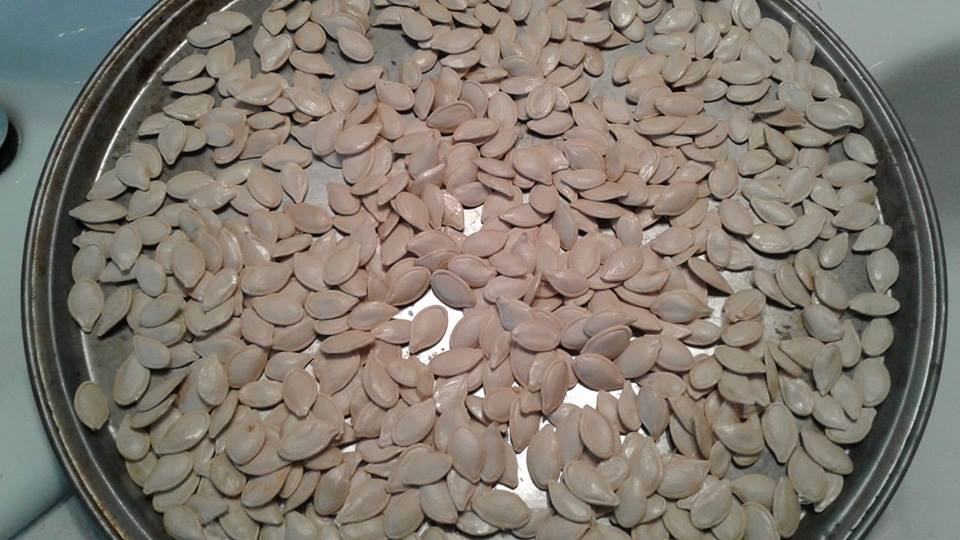
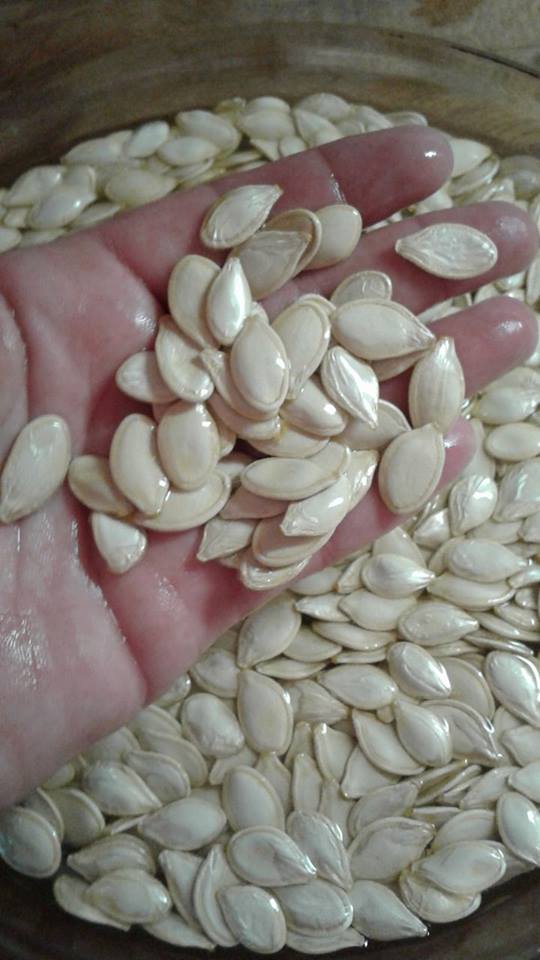
So with the above in mind, I selected the two pure pie pumpkins that were ready first to save seed from. I cleaned the basic seed out of the pumpkin. Then I filled the pan with water and let other bits float to the top, empty seed pods also float, remove them, if anything is stuck to the full seeds, help wash it off.
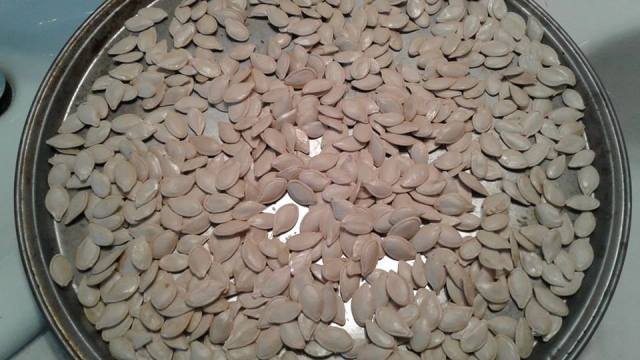
 

Check the seeds, pick two or three nice full ones and open them.. confirm that you have a mature seed in there. Then look at the rest of the seeds, remove any that odd shapes to them, a dip in the side.. remove it, one that is very narrow compared to the rest, remove it, anything that feels light in weight, remove it.

The ones that are left should go on trays or screens to air dry. Do not put your seeds on paper towels, there will be tiny bits of paper left on the seeds when you take them off the paper that can affect them in a negative way.  Allow to dry for 12 hours, then shift them around and continue drying for another 24 to 48 hours.. it could be longer depending on time of year, heat in the house and how humid it is.. clearly a warm sunny day vs a rain day will affect how things dry in your house.

Keep drying them until they lose their sheen and become a duller flat color and they will slip though your fingers in a smooth way, if they catch at all.. they are not dry enough..

Once they are dry.. look at them again.. things that were not visible when they fresh will show now that they are dry, remove any that have broken edges or show large dips in them.. keep only smooth, full seeds.

Move them to a paper bag, label the bag and place in a cool dark cupboard for winter storage.

Thought you were done.. Nope LOL Wait a week and then run a seed test.. take five seeds and use the baggy method and test them, they should sprout quickly and fast.. check your sprout amount.. you are looking for at least 80 to 90 percent sprouting results.

If you have that.. great.. you are good for the year.. keep your seed, remember to do your seed test again in the spring before planting.. this will give you info on how well your seed storage is working for you.

there is no point in keeping seed that will not produce for you when planted and you will also need to know to add that seed to your seed buying list.

However if you have run the seed test, you know you have good seed going into your seed saving box. In my case, I do not need this many pie pumpkin seeds but I am planning on packaging a number of them up for the local seed swaps that happen in my area.
Posted in Garden | Tagged , , | Leave a comment

Beach Rose Hips/Seeds

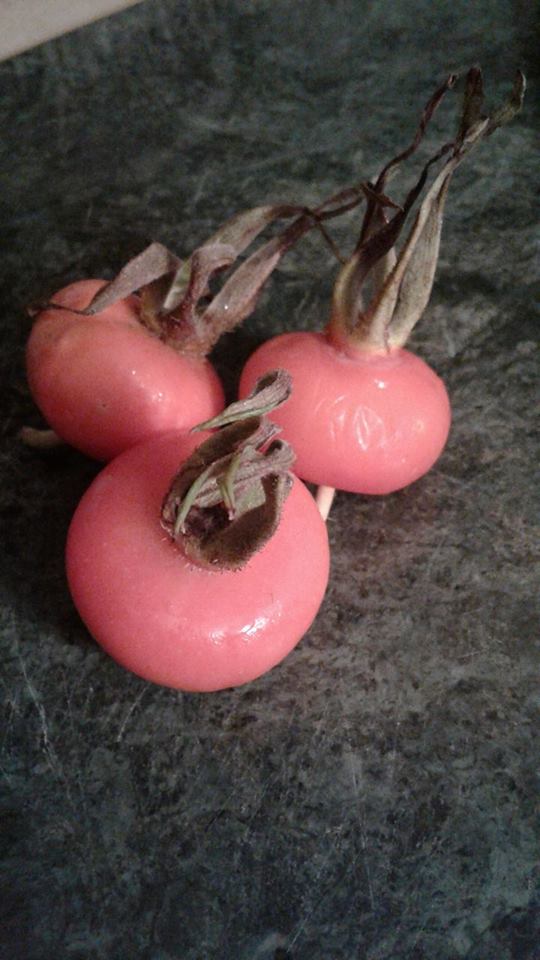
I think its a beach rose hip, it fits what I have been told.. So a friend of mine went to Nova Scotia this summer and he came home with wild harvested rose hips.. I have never seen rose’s have these size hips..  they are the size of small crab apples.

He used most of them to make a amazing jam/jelly with them. When he shared photos of them with his friends, I asked if there was any chance that I could snag some seed. We meet up on the past weekend and there are here..

He has been keeping the hips and seeds in the fridge, I will continue to do so for a certain length of time and then I will start some of the seeds. I have lots, I will offer a plant or two back to him but most of the ones I plan to grow will go into food hedges and or into one of the layers of my rain garden levels.

I hope that the scale with the standard tsp in the picture will give a idea of just how big these are. I have enough seed that I will start what I need and then prepare the rest of the seed so that in the spring, it will be ready to go out in small lots at our local seed exchange table 🙂

I understand that these row bushes are like most.. fast growing, hardy and tough.. they don’t mind getting their roots damp at times and they help hold sandy soil together. I used to buy rose hips to give the powder to my Brandy girl to help with her hooves.  I have been wanting to get a few hedge roses to add to the farm. These are said to grow 3 to 6 feet in height.

Given they were wild collected hips an seeds, what I will get from the seeds to point is unknown.. it will be fun to be surprised 🙂

Posted in Garden | Tagged , , | 8 Comments

Rain Garden – Stage one

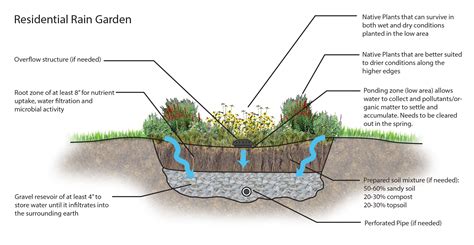
Ok, so this is a example of a small rain garden for a house in the city or town..  Mine is a massive rain or storm garden to be..  It will collect the water off my roof, as well as collect the overflow from the one side of the driveway to the other side.  This system is created to catch storm waters and recharge your ground water.

Given our big hard storms, in the past few years we seem to have a pattern of no rain.. HARD large volume’s of rain. Collecting that rain for storage is important but so it creating a system that helps keep that water on the property so that it can recharge our shallow house well.

We called in help on this one, It was not a do it by hand project, we had cleared the tree’s but the machine cleared the roots, and did the first digging.. The bottom is nicely created flat and we have already started adding in many loads of compost from our farm to the pit and it will be mixed with the native soil into the first layer

We will continue to clean our barn and use the fall prep to have the barn ready for winter use into this project, mixing the compost and the native soil till we get the level we want.. then we will have the gravel hauled in and hire the same person to come back and move the rest of the soil in at levels and to build the permaculture berms around the rain garden itself.. I also have a area that we need to have him pull another large amount of roots up.. he can do it in a hour that would take us much longer.

Then it comes back to us and we will need to start planting it.. Its a longer term project and of course we have to create the dry creak bed that will lead the water to the rain garden itself from the house.


Posted in gardens | 10 Comments

Lamb Veggie Soup Recipe for the canner

Good Morning Folks

I tracked my amounts this past weekend when I was canning a couple different recipes.

The perk of this recipe is that you can switch that lamb burger with beef or any other kind of dark meat (including wild.. would work with deer or moose).


Prep work is required.. Cook your meat and drain off extra fat, I do not rinse my meat but will drain off the extra fat.  Prepare your Veggies and mix them well.

Lamb Veggie Soup Recipe for canning up of 18 pints

3 pounds lamb at 1/3rd cup of cooked lamb per jar

80z of mushrooms

5 pounds of carrots

1 pound of onions

1 large bunch of celery/greens included

4 peppers

Heaping cup of veggie mix per jar, if a touch leftover.. just split between the jars

Beef or lamb broth to cover. Make sure your broth is very hot when it goes in the jars and that it matches the hot water being put in your Pressure Canner.

75 minutes at ten pounds for pints/ 90 for pints

I like the fact that I can split everything in amounts in the jars but you also have the choice of adding your cooked and cooled meat and putting it over top your veggies and then with very clean hands or spoon, you can gently mix it though and then use the pre-mixed meat bits and veggies.

For me.. they mix when they are moved out of the jar and heated so it makes a difference really only in the way the jar looks on the shelf.. not in the serving bowl 🙂

Posted in Canning, Life moves on daily | Tagged , , , | 3 Comments

Pears.. Pears and more Pears :)

Well local pears finally went on sale.. In the end, I put up 40 pints of pears, five pints of pear juice and feed out a good amount of cooked trimmings to the both the chicken flock and the pig..

There are more over on a different counter but you get the idea..  I thought.. hmm, how am I going to turn a day of pear making into a post of the blog..  I got it.. lets find out if I saved any money..

So these are all based on my local jars prices, how long I tend to keep jars for, the cost of lids that was bought by the case on sale, sugar was also bought on sale and I made sure I am doing as much canning as possible on the weekend to get the lowest power costs for the stove as I can get.

So each pear cost me 29 cents, and it took 3 pears approx. per jar for pear cost per jar to be 87 cents.

Cost breakdown.

  • Jar – .10 cents (one I buy jars on sale, two I look after my jars and they on average last me at least 10 years, I also try to find jars at second-hand store etc.)
  • New Lid- .11 cents ( I am dreading when I use up my large stock pile and have to replace it with today’s current lid prices, if I had bought new lids yesterday it would have cost 16 cents a lid instead of .11)
  • Power costs – .7 cents per jar
  • Sugar- 5 cents per jar (Only because we were able to get a good sale on sugar this fall. The sugar has been running about 1.50 higher per bag at full price)

So that brings my total costs to 1.20 per Pint.

Now I know that if you bought a pint jar of canned pears at the farmers market locally, you are looking at six dollars a jar.. so that would mean a savings of 4.80 cents per pint, or a total of 192.

But lets switch over to the store.. the large can of pears at the store that is Del Monte is current at 2.69 plus our tax for a total of 3.03

So my 1.20 a jar of pears now saves us 1.83 X 40 jars means that we saved 73.20

I would do it just to control how much sugar is used, knowing that its fresh local Ontario pears and so forth.. but the savings is nice as well.

Ps, yes I know that I am not paying myself for my time but then again, I am also not trying to figure out the difference in buying local pears, processing at home and in jars etc vs the costs of canning in a different country, not local fruit.. shipping the cans by road.. you get the idea at least I hope..

I know that the output to get all the canning gear costs but those are sunk costs for me at this point. I know that for someone just starting out that this would need to be included but I think they should still consider breaking it down over the years and over the jars life 🙂

Happy Sunday to you all..

Posted in Canning | Tagged , , , , | 4 Comments

Snakes on the homestead

There was a lovely garden snake that was heading towards my chicken yard this morning and as the chickens would have been hunting it hard and fast. It seemed like a good idea to catch this pretty babe and move it across the garden an release it in the front garden.

Garden snakes feed on the plentiful small creatures that abound in their habitats: grasshoppers, worms, small birds, mice, leeches, tadpoles, insects, toads, fish and frogs. They are called “opportunistic hunters” because they will attack prey if it travels within it’s striking distance. I like that our land is healthy enough to support Garter Snakes.

http://www.simplywildcanada.com/wild-species/reptiles-of-canada/garter-snakes-of-canada/

The garter snakes of Canada total six species, ranging from 45-97 cm long. They are olive brown to black, with yellow, orange or red stripes running horizontally down the body.   These small snakes are found from Vancouver Island to the Maritimes, north into the Northwest Territories, and are absent only from Newfoundland.

They live in a wide variety of habitats, but are generally found near water.These snakes have no venom, but many species vibrate their tail in dry vegetation to imitate the sound made by rattlesnakes.

All species have a common defence mechanism of releasing a foul smelling scent from their anal glands near the base of the tail. They may bite if handled, but are harmless. Garter snakes are active during the day, and may often be seen basking during the early morning hours.

We also have Red Belly Snakes, they are smaller but they are also wonderful little hunters in my gardens and wilder areas. We are lucky because both are harmless to both our livestock and ourselves.

Do you have snakes on your homestead, are they friend or foe?

Posted in homestead | Tagged | 5 Comments