Oct is a eat out of your pantry month for me..

I had already decided that this coming month of Oct was going to be a eat out of the garden, pantry, farm month for me, I’m looking forward to it, I have been very busy in Sept and have no doubt eaten more “out” meals in the past month then we normally do in six months or more, we have had “junk” to eat, way to much sugar in the way of the add a pop to this meal or that, to be fair, most of the time we did order water only but still even a few pops over the month are really quite bad for us.

Say on C.D. site that there was a fellow blogger talking about that oct is a blogger challange from eating rules to make oct unprocessed, aka cook from scratch and use only food that you can name and understand what part it was or is. He does have a good list of things, but I am going to make it fairly basic for our part in this, if its something that we could make ourselves with either my or Dh’s knowledge and I have a full understanding of what it is and its a whole food, then its included.

Example, Salt, I understand a number of ways that salt can be gathered and processed (I have done this, but my salt turned out grey but it did the job) having said that I am going to use the local ontario salt that is in my pantry.

However, I am going to make it just a touch harder on myself, which should make my cooking more fun for me, which tends to keep me a bit more on the correct path, and that is, I will try my best to make each meal 50 percent or more also 20 mile diet or closer, I picked this number as I want to be able to include the local whole grains I bought in 50 pds lots from the farmers this fall, but I don’t want to reach out the full 100 miles as it includes to much freedom in what I can get if I want to do so.

Have not figured out how I am going to deal with the challange in blogging terms, I will certianly be sharing both the good, bad, and the cravings, but have not figured out the format yet.. can’t decide if I will do a weekly post..

Posted in 100 mile diet | Tagged , , , , , , , | 6 Comments

A little extra time in the woods!

We often spend time out in the local woods but we rarely overnight it anymore due to the farm and all its needs, with MIL visiting and fall in full colors, getting out for a little overnight stay just seemed like a ideal thing to do.. only one thing that really needed to be figured out, how do I get to spend time in bush and at the same time provide a bed and at least a few luxuries for her without renting a fancy cabin.. Here was the answer!

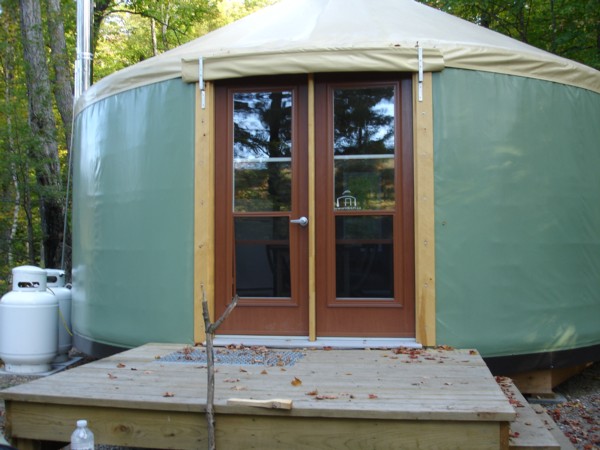
Yup, we rented a yurt, it had two sets of bunk beds, a wood stove, propane fridge and two burner stove, no power, no water, a good little walk to the outhouse, a outdoor table and fire pit. A great meet in the middle, it was in a provincal park but it was in the “semi-wilderness area” which means it was only 33 sites across the little lake  for tenting only, plus the two yurts one on each end of the lake for rent, it was a good couple miles down a narrow gravel road, but check out the lake we were on..

Not a bad view just down the path from the yurt to lake,  I thought it was wonderful, we spent the morning doing all the chores and then all the extra prep for a overnight out, extra food bowls, extra water bowls, every extra water’s that slowly release water as its used, extra big critter feeders that hold a couples days worth of food at a time, extra bedding, New 900 pds hay bale cut and out in the feeder, and with one planned check in the evening by a friend and we were off.

We drove a longer route out into the park, stopped to pick fresh local organic apples, stopped at this place or that to just look, and arrived pretty much on time to book in and we had a nice walk about, and then a good cooked over the fire supper, and lots of good stories, laughs and teasing to be had, DH’s Uncle B drove up for the outing, he is a wonderful gentleman with a great sense of humour.

We found out that the mattress’s were better on the floor then on the bunkbeds, and in the morning, we got up and I thought I would sneak away with DH and cup of hot drink to go sneak in the view of the lake, but we had only gotten half way down the path when I say the big rambling black shape come from the left side of the road, and hand shoots out, and I am go back up, that’s a yearlin black bear cub, mother can’t be far behind, it went across the path, over the road and into the bush, so back up we went and waited a few min to be sure it was all clear, and we headed down to see if we could find tracks, (I had the camera with me, but forgot about it in my desire to back up the trail to the yurt)

I was able to find some push off but nothing that I considered a great track worth a photo, sorry, on the other hand, I was so proud of my DH, I was tracking the trail right, and he tracked it left and he was able to stay on it and show me here and here.. I lost it halfway up the hillside and didn’t want to go further into the bush to see if I could pick it up again, there was only two other folks in the whole site, both in tents, wonder if it checked out either site before coming out way 🙂

Because we were in a park we didn’t pick anything but we did have a great fun spotting and showing each other what we had found, Dh found more different things that we could have eaten or prepared in different ways then me, but I was the one that spotted the most tracks, dung, critter trails and wildlife, so it was a even trade in a way. Got to pull out the backpacks, the water filters, practise firemaking skills, I choose to bring very limited food supplies and even more limited cooking tools, plates etc, the main thing in use was tinfoil

It lightened my heart to get to spend some time outdoors  and yet I came back to the farm with pleasure to be home as well.. Can’t ask for more then that!

Posted in Carfts an Hobbies | Tagged , | 6 Comments

So Pretty Now.. Fall Colors coming in

Its so pretty out there right now, the bright yellows and stunning dark reds are starting to pop inbetween the dark evergreens, sign’s of fall are everywhere, from the honk of the geese flying overhead, from the siting of the turkey vultures passing though the farm, from the first sign’s of winter coats starting to come in on the farm critters.

One part of me just wants to go.. ahhh that’s so pretty, and the rest of me is in having a AHHHH, time is short! and there is so much to be done, I would like to say that the garden has been put to bed, I have been reading on some of my favorite blogs that the gardens are done, other’s that the push of canning is slowing down and I wish I was there..I’m not..

I still have hundred of pds of things to come out of the garden, the fall gardens are in and depending on the plantings, new things are coming ready now, I have lots of fall butchering to get done and we are behind on getting the farm prepped for winter itself, and the truth is that the snow could fly for the first time in a matter of weeks.

So I am doing something that makes me feel better, I am making lists and checking them twice, I don’t know if you make lists or not but they can be so helpful, if you have an idea of the time on most items that need to be done, then you can figure out a couple things using the lists.

The first thing I do is write down everything myself and DH can think of that needs to be done, then we look at the list and do the first split out, what needs to be done now! vs what we would like to do “overall in the big picture*” of that would be nice.

Live Example, prep and get the next size chick box ready for the now coming two week old pullets-Needs to be done NOW! vs that pile of 2 by 4’s needs to be moved from under the safety of the little barn overhang and put up into the rafters of big barn for winter storage.

The second thing is to look at money, sorry I know that folks on blogs can sometimes skip this step and I understand it, we are private on certain things but when you look at that list, you need to figure out if you have the gear or product or items required (hopefully bought over the year on sales, never at full prices, using those handy flyers), its important when figuring out things on your list on is it paid for already, requiring only man hours or is it still need to be bought, if it still needs to be got, now you not only need to budget in the the direct cost of XX but also the man hours to drive to and from the stores, plus the gas, and if there is anyway you can tag team these things to limit time off the farm, and limit costly trips to town.

This can often shift things on the list as to when to do things..

Live Example, We are putting up barbwire, a total of three stands worth, on the inside of the sheep pastures so that they are also fully working pastures for my cow now, we don’t want all that hard work we did on the sheep wire to be pushed around by the much stronger and bigger cow. I got the barbwire on a 55% off sale early this spring and I got enough to do the whole farm, as it was almost a 2 for 1 sale.

So on the list was, put up another row of barbwire vs rewire the bottom of one of the rabbit hutches, now the hutch needs a repair but it does not have rabbits in it, but I have a breed rabbit and will have little ones that will need it as a grow out pen, so both need to be done but neither are a push issue(just alot nicer to do it in the cooler fall time with limited bugs)

So on the list scale, we can put up barbwire with only man hours and no down time off the farm and then plan that on the next scheduled trip to work, DH will swing over on his way to the local hardware store and bring home two rolls of rabbit wire, one that we need and one that will go into storage so that we have extra.

The next thing that we look at is man hours and level of how hard things are in regards to workout, somethings take time but not as likely to wear you out, other things will be a great workout but will also make you want or need a rest afterward to recover.. easy items vs elbow grease required items are singled out.

Live example, -Canning veggies is easy work compared to cleaning out a stall or turning compost or hauling water, or trimming feet on the sheep etc.

Ok at this point, the lists are looked at, and with the combined knowledge of

  • How soon does a item need to be done
  • Is it going to cost money or just man hours to do at this point
  • How many man hours required
  • How hard is the work itself
  • Is it a job one can do or is it a two person job

Now we can figure out order of how things will work, we can figure out how to tag team different work to get the most done in the day, figure out where to slot in the hard heavy work, and when to shift over and have planned needed but lighter work for a recovery period.

This extra ten min of talking and looking and much written on paper allows us to step away from the feeling of ahhh, so much to do, and brings us into the mind set off, today we are doing this and as things are crossed off, you get a real feeling of pleasure at knowing it off the list, which encourges you to try and get just one more done. Its very important to have that list of lighter smaller quicker items on the list so that when you still have things to look at doing when you are tired or sore, but also so that you can see things being finished each day.

So are you a list maker? or do you like to fly by the seat of your pants? What is your method of making sure things are checked for the coming winter?

* This overview of the big picture looking ahead a month, three or six months or a year in advance, combined with the basic costs is what works the flyers in order to know that you will need xyz for this or that coming in the future project, this allows you to look for these items on sale, at farm sales, or to barter for them, all of which save you $$ and still allow you to do the project when it hits the top of the list.

This is a homestead preparedness challange Blog post, I know that lists might seems like a strange prep item, but figuring out when its time to do things while saving money, is part of being prepared in my way of thinking.

Posted in Life moves on daily | Tagged | 4 Comments

A little Caving and Hiking Trip

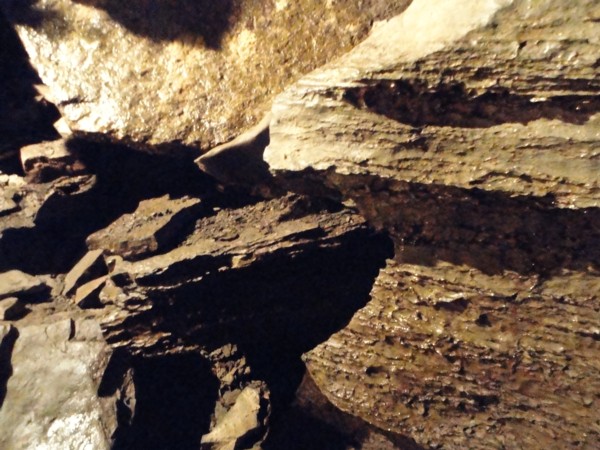
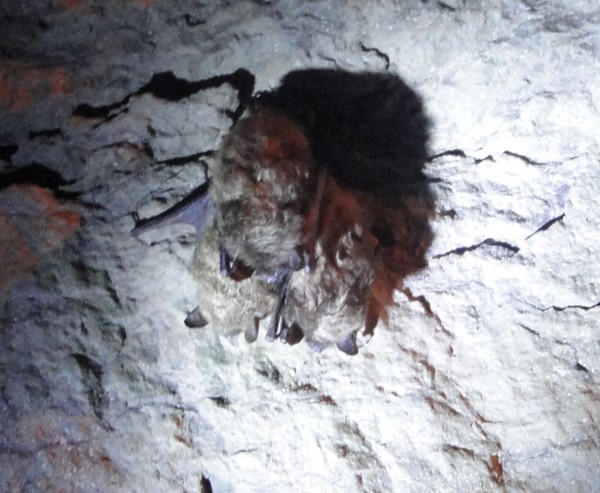
We were not the only ones in the cave..


Posted in Life moves on daily | Tagged | Leave a comment

Making Mobile Health Kits

Well this week has been a interesting one, so far

  1. MIL got stung by a wasp on her eyelid, it flew in under her glasses.
  2. Got some nasty bug bites
  3. Got a nasty sliver of plant needle
  4. Had a sheep with a foot that needed care
  5. Had a pull over now event that required a into the bushes run, if get my pun?

Now what do these all have in commen? Yup, minor treatable health issues that if untreated would certainly reduce you or your critters daily quality of life in the short term and could left untreated maybe cause longer health issues.

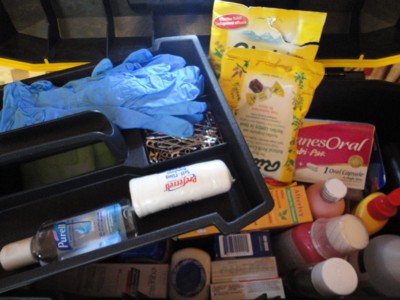
Which brings me to Mobile Health Kits, They can range from smaller kits with bare basic’s for your vehicles or backpacks to take with you on hikes, or they can be your bigger regular mobile kits for house or outbuildings, I personally make a vehicle kit, and have big kits in the house for human, critter (house) and critter (barn)

I use a tool kit personally, the size I get depends on my own needs and how much I know I will want to stock, some things are crossover’s and can be got in bulk and used to stock all kits, a good example of that would be gloves, instant hand cleaner , safety pins etc.

I have a small battery powered LED light in each kit, along with a small flashlight, the LED is attached to the top of the lip of the box and turned out, will allow you to see even in the middle of the night no matter where you are, while still having both hands available. The small flashlight comes in very handy if you need a spot light or to see something in great detail. I keep a pair of reading glasses in each kit in case I need to see something up close, they were got at farm supply store for just a few dollars but I have seen them at the dollar store as well, great if you are trying to get out a sliver or see detail that you got a wound cleaned out.

Now my peaple kit covers a number of basic’s, ranging from colds, flu’s to all the basic’s in a good first aid kit, hot packs, cold packs, slings, sting remedy’s and the list goes on.  The critter kits do look a far bit different from human kits, and they are tailored for small or big critter care and I have a barn birth kit that looks quite different then the basic barn health kit, but the joy of this system is many.

One you can easily tell someone to get you the kit and then have what you need at your fingertips when you need it, instead of going, this is in that cupboard, this is in that drawer, this is in that box in the bedroom or under the bed etc.

Two, because its all in one place, its much easier to see if something has been used or need to be replaced due to expire dates etc, most things either are good for many years or if you take time when you are buying and looking at the items available on the shelves, means that you can normally find things good for two to five years ahead most of the time.

Three, its tailormade for your life, your family and your needs, this way you can take in your allergies, your families likes and dislikes of brands, basic kits that you can buy are great but if someone inyour family can’t swallow pills, you need to adjust to make sure you have meds that will still work.

So do you have mobile tailor made health kits for your house, vehicle or critters?

This is a Homestead Preparedness Challange Blog Post.

Posted in Just in Case | Tagged , | 2 Comments

Pear-Jalapeno Marmalade Recipe

Dear Hubbies Ma is currently visiting both us and some of the other family, and she had brought me a new history/cookbook called Acadian Plantation Country Cookbook by Anne Butler. Its a interesting book, a couple pages on the history of each local Plantation with photos and then three to five of their most famous known recipes..

So far I have made one, sort of.. Can I ever leave a recipe alone.. most likely not, but my version turned out amazing! so we are going with the one that was made, it was inspired by a recipe from Hilary Slaughter Grand Coteau.

  • 8 ripe pears-peeled an cut into cubes
  • 1/2 cup of frozen orange juice consentrate (I used pulp-free)
  • 3 jalapenos, sliced thin, seeds discarded
  • 1/2 cup of finely diced red onion
  • 2 cups of sugar
  • Juice of one Lime and one lemon
  • 1/2 a cup of apple Cidar vinegar
  • 1 cup of water
  • 1 tsp of powdered ginger
  • 1 tsp of Pumpkin Pie Spice
  • 1 stick of cinnamon

Cook all ingredients in a big steel pot until tender and the juice is thickened(watch this carefully once it started to boil, and stir often) Made 4 8 0z Jars, waterbathed for ten min.

It was recommended to go with all kinds of meats, but I can see all kinds of ways to use this amazing spicy flavor burst!

This is a Simple Lives Thursday Blog Hop Post.

Posted in Canning | Tagged | 1 Comment

Quilt patches show..

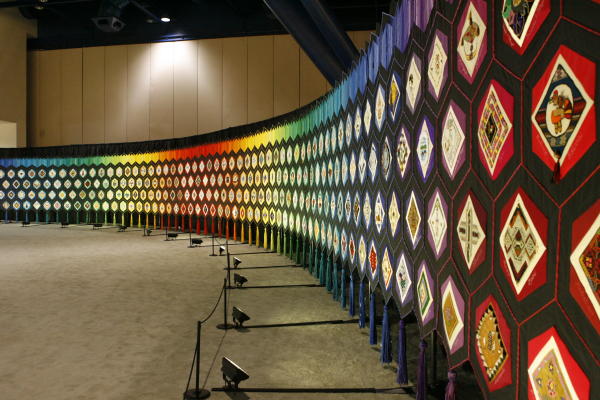
Got out to the local farm fair, more on that later, but today’s post is about some of the amazing quilt patches from the display called “Quilt of Belonging

The Quilt of Belonging is “..the largest and most inclusive work of textile art made about Canada”  The 120-foot long by 10.5-foot high tapestry portrays the cultural legacies of Canada’s First Peoples and of every nation in the world.

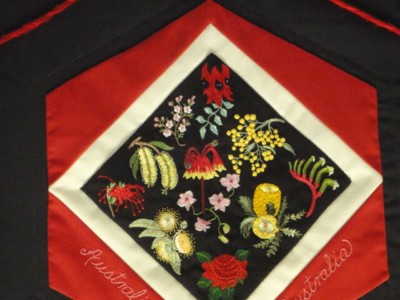
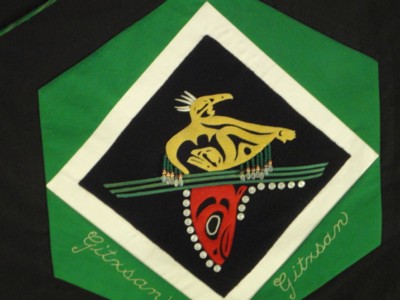
Here were some of my favorite different ones.

This one is made out of seal skin, the amount of time cutting the fur for the drawings part must have been very time consuming.

This one has the most wonderful bead work on elk leather background,

You can spot the West Coast Native style in this one so clearly..

This is just a very tiny sample of the hundreds of patches in the show..

Posted in Carfts an Hobbies | 3 Comments

Dear Hubby’s Prospecting then and now..

Back in the day, I (Dear Husband) did some prospecting out on the tundra.  I’d be looking for mineralization in the old Canadian Shield rocks of the north, and if I’d done my homework correctly, I sometimes found little bits of it.

When Farmgal and I moved down to the farm, that came to an end.  My new job didn’t involve that kind of work, and at any rate, the country around us wasn’t the kind of country where one looks for gold or diamonds or such.

However, it turns out that it didn’t mean I couldn’t prospect.  It just meant I’d be prospecting for something different:  Wild foods.  Let’s face it – foraging is prospecting for good, and it can be a rewarding experience.

Realistically, I suppose it’s possible to find anything in nature that you could find in somebody’s garden or orchard or hayfield, provided it can self-propagate.  This would include hard fruits, soft fruits, mushrooms, and other “wild” food like garlic or dandelions.  Our experience does seem to confirm this.  We’ve had success finding a number of different kinds of plants (though finding dandelions is hardly an accomplishment, is it?).

The first few years, we went out to the local woods to look for mushrooms.  We’ve yet to find the motherlode – the hen of the woods – but we’ve found a few that are edible and tested them out.  Later, when we’d go for walks on trails, we’d watch for soft fruit, especially blackberries and blueberries.  Nowadays, we watch for hard fruits. 

If I’m at work and go for a lunch-time walk, I look at the trees and shrubs around me – turns out there are a variety of crabapples, apples, plums, and wild grapes in these parks.  I’ve picked the plums, and Farmgal has made some awesome plum sauce out of them. 

If I’m awake on the commute home, I watch the scenery go by.  Last year about this time, I was looking out the window and a flash of red caught my eye as the bus zoomed along a secondary road.  I noted the location and made myself stay awake the next day; I pinned down the location of the red stuff, but we were going too fast for me to get a good look at it.  When I had to drive in to work a few days later, I made a point of re-tracing the bus route on the way home, and pulled over when I got to the spot in question.  I collected leave and berry samples and my suspicions were proven correct when I handed them over to Farmgal later:  I’d found a high-bush cranberry.  This year, I’ve spotted another five in different places, so Thanksgiving’s going to be a delicious affair.

So what’re some tips for “prospecting”?

1)  Know what might be out there, and what it looks like. 

2)  Know where – and when – you might find wild foods.  Blueberries might favor acidic soil associated with evergreen forests.  Blackberries might grow on the edge of recent timber cuts.  A range of fruit trees might grow in ditches or in abandoned farm yards.

3)  Watch for “anomalies” – the colors, shapes, or smells that don’t fit in with the non-edible landscape around you.  A flowering tree along the side of a road is an anomaly.  So is a white mushroom against a backdrop of dirt and old leaves.  So is a clump of shrubs and bushes in a clearing amidst a forest. 

4)  Investigate your anomalies.  This can be as simple as stopping for a minute to collect samples of leaves and fruits – you can then look these up in your books and on the net when you get home.  You may find that the flowering tree on the side of the road is an apple tree (apple sauce!), that the mushroom in the forest is an oyster (cream of mushroom soup!) or that the shrubs in the clearing are soft fruits planted by a homesteader or spread by bird poop (in which case – gooseberry pie!  Elderberry juice!  And maybe some neat flowering plants as well, if you’ve found an abandoned farmstead).

5)  Take notes.  What time of year is it?  What kind of terrain is it?  Not only can this help you identify what you’ve already seen, it can also give you a sense of where else to look if you want to search for more.

6)  Test.  Make sure you’re not on somebody’s yard, for one thing.  For another, be careful in sampling the prospective wild food, just in case it’s not quite what you think it is.  Geologists don’t lick rocks (…much) because they can be toxic, and foragers should treat fruits and food with similar respect.

7)  Have fun.  You don’t need to make this a chore of some sort.  Watch the trees and plants around you when you and family or friends go for walks, picnics, or drives.  Take a different route home, drive a little slower, and keep an eyeball on the ditch.  Even if you don’t actually find something, the experience itself might just be a nice, relaxing break from the usual.

Once you start prospecting, you’ll probably find that you’re getting better at it each year.  Your eye will start picking out the apple trees, the raspberry stands, and the elderberry shrubs, even if you’re really not looking for them at the time.  In this way, Farmgal and I have found apples, crabapples, plums, raspberries, strawberries, gooseberries, blackberries, blueberries, and even nuts.

Do you forage or prospect for food?  Would you add any other tips?  What have you found (and what have you done with your finds)?

Posted in wild foods | Tagged , , | 1 Comment

High Bush Cranberries and their relatives

The high-bush Cranberry grows to a height of about 4 meters and bears large red acid fruits in drooping terminal clusters. There are at least eight speices of related bushes across canada, some of the common names include squashberry, hobblebush, moosewood, nannyberry, sheepberry.

For me personally, I am after the high bush cranberry, and leave the other’s alone, I don’t find them to be worth the time but feel free to try them and make up your own mind on if they appeal to your taste buds.

If you are hunting for them, look to edges of woods, and around ditch’s or edging swampy area, they seem to like moist areas, they can be found thoughtout the southern part of canada from Newfoundland to central B.C. Their relative Squashberry is more northern, liking boreal forests, and grows from Alaska to Labrador.

The fruits are quite juicy but are very acid (think pucker your whole mouth), when first mature, they are hard, crisp and very sour, but after getting a good hard frost, they become soft and quite palatable even raw but will still be tart.. they are best when cooked as either a sauce or Jelly.. (farm gal note, they have way to big of a seed to be used straight in a sauce, but if you put it the though the food mill, you will lose the seed, but get more flesh then if you make juice.

High-Bush Cranberry Jelly.

  • 8 cups of washed and de-stemmed high bush cranberries
  • 1 cup of water

Place the berries and the water in a steel pot and simmer for about ten min. Drain threw a jelly bag or double layered cheesecloth.

Measure your juice and boil for at least five min, use six cups of sugar for each 4 cups of juice.

Stir till sugar dissolved, then bring in to a boil and cook, stirring constantly, until jelly sets on the plate test, the recipe uses open kettle canning on these, so it says pour into hot sterilized glasses jars, store in a cool place, if you want to waterbath, I would say ten min would do the trick, This makes a tangy dark red jelly.

These berries were used by the native peaple of Canada, in B.C. they were so valued that berry patches was owned by certain families and were passed on from generation to generation. The berries were perserved in oil or water in tall cedarwood boxes and were eaten at feasts. The boxes of berries were also used as gifts or as trade goods. Among the Kwakiutl of Norhtern Vancouver Island a box of berries was considered equal in value to two pairs of blankets.

Moving over to Europe, the Norwegians and Swedes eat high bush cranberries cooked with flour and honey and also distill a spirit from them, They were also a favorite in Maine by the lumbermen of old, who used to eat them with molasses..

Do have a peek around your area and see if you can find these lovely berries and give them a try this on the thanksgiving or christmas table.

This is a homestead Barn Hop Post.

Posted in wild foods | Tagged , , , | 16 Comments

Building a pantry and shopping loss leaders

This was my last shopping trip in town and as I already have a pantry built up, I am able to pretty much able to shop loss leaders and top up things that need doing so only when things are on sale.. so lets look at what got brought home.. Everything was on sale between 20 to 50% off

  • 3 big bags of flour to bring me back up to my 2 year mark on flour storage (kept in freezer)
  • 5 Cases of Quart jars on fall sale price
  • 2 flats of bottled water, on sale for 2 dollars a flat, we try and keep at least six in the house at all times, along with the larger water storage barrel and tubs, plus we have a hand pump on the back well.
  • 6 box’s of Klennex-DH’s ma is coming to visit and she had to have her box’s of Klennex and I have figured out that at some point when a cold comes around, so do I, either then or I need alot more hankies, cause when sick laundry does not get kept up. So that is a years worth right there.
  • 10 60 liter plastic tote’s with lids for storage stacking
  • The top right box, has 8 instant coffee jars of my favorite kind- that is a years worth right there and I still had three months supply at home.
  • The left box has 8 cans of canned milk It goes on sale around here about 4 times a year
  • Bulk Chili powder mix that was on sale, keeping a good supply of spices in the house is very useful
  • 3 pd bag of big carrots for stew making, did I really need them no, but they looked great and I was tired of working with itty bitty carrots in the garden.
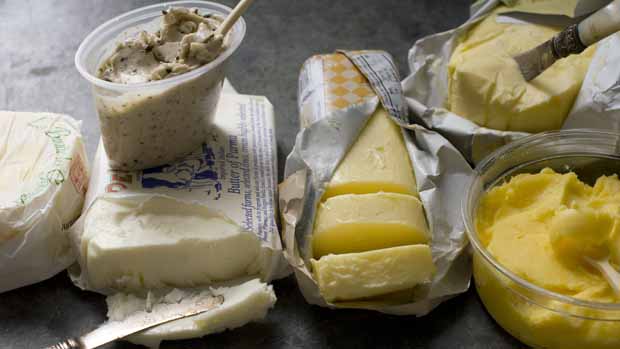
  • In the same week, I was able to pick up 40 pds of on sale butter, and into the freeze the box went, combined with the butter I had, that gives me a pd a week for a year, on top of the rendered lard from the last pig I butchered out.

So it does take a little while to build your pantry, first you have to figure out what you need to stock up on, what does your family eat, what meals do you make on a regular basis, what are your most common cross-overs that get used again and again, how many pds of butter do you go though a year, how many bottles of dish soap, hand soap, Laundry soup, cleaning supplies, flour, sugar, salt, etc.

Just do so much per month to start,- pick three things you know that you use all the time, then start watching your flyers, when they go on sale, buy a three or six or years supply of them, depending on your comfort zone on how far ahead you want to get, my goal is to get to a solid two year pantry with rotation ongoing.

Once you have them in the pantry, figure out your next things required and repeat, keep watching those flyers, loss leaders are the things on sale that are to bring you into the store, now the key is to get in, buy in bulk and get back out without spending extra money.

This means you have a list, a cash budget and a leeway fund of ten or twenty dollars, and you stick to it.. once you get in the habit of this, it will get easier as it goes. Short on funds, and can’t even think about buying in bulk like that yet, then go to the point of waiting for sales and buying two in place of one. It will build slower but it means that the day you are out of something, you will have a backup in place.

Now its my understanding in the USA that they take coupons alot more then they do in canada but its always a good idea to watch for coupons instore and or in the flyers and use when possable.

The is a homestead prep blog post.

Posted in Just in Case | Tagged , , | 10 Comments