I love a good canned Tea Concentrate Hibiscus has so many traditional health benefits that it was the clear winner for me to make up a batch for the fridge first and then for the canning pantry!
Hibiscus Tea Concentrate Recipe
Hibiscus Tea Syrup Recipe- 38th edition Blue Book Guide to Preserving
Makes approx 4 cups
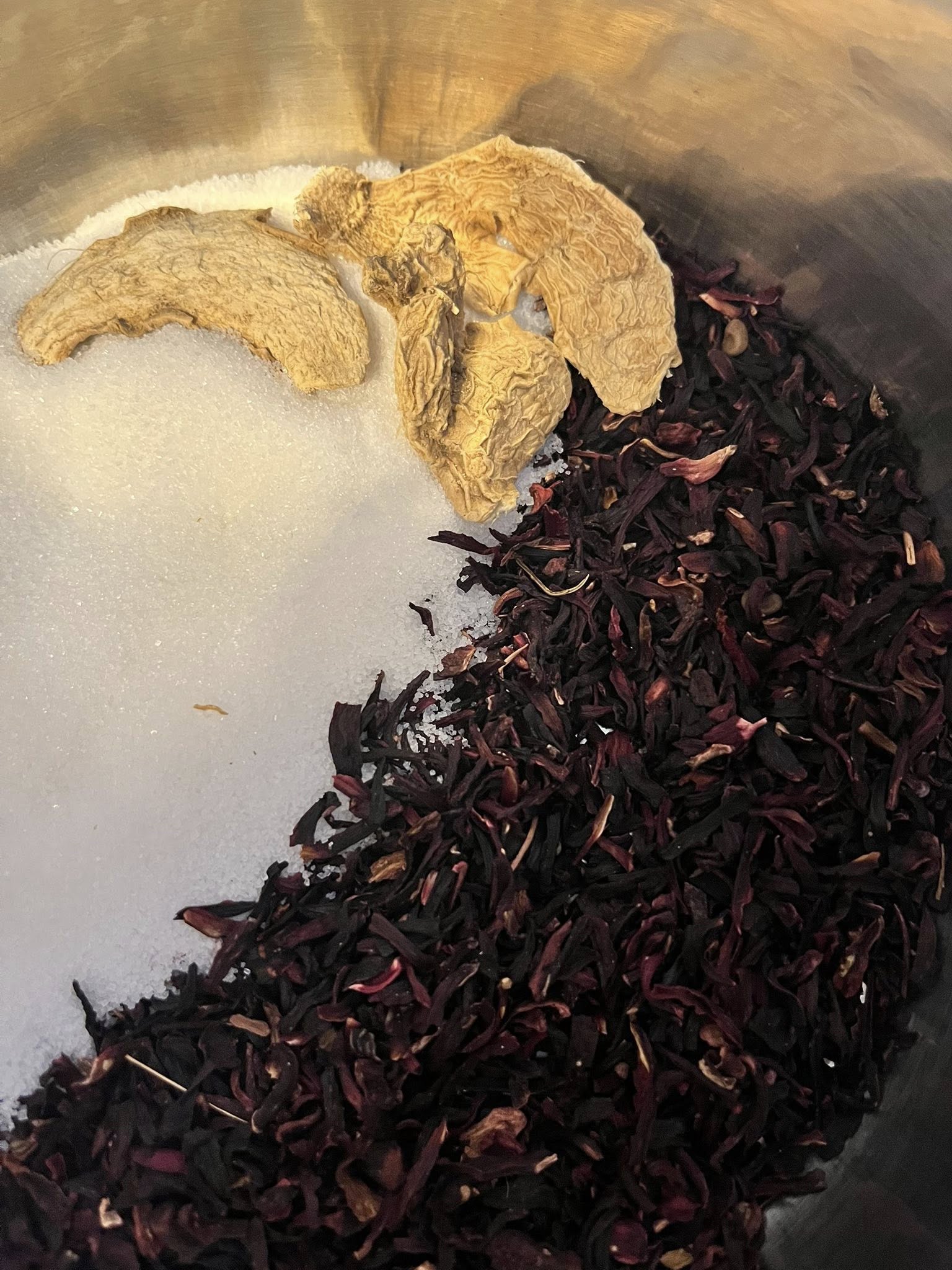
½ cup dried hibiscus flowers
2 cups sugar
3 cups water
Combine dried hibiscus flowers and water at med heat, bring to a boil, drop down to a simmer for 5 min, then remove from heat and let steep for 30 min, strain, you will need to gently press the flowers to get them to release their liquid
Return the tea to the clean med size pot, add the sugar and extras if using them bring to a boil, then reduce heat to a simmer, simmer for 5 min, Into a clean pint jar, at which point you can either water bath can it for 15 for shelf stable or cool to room temp and store in the fridge for up to 4 weeks.
I have a high tea pot luck coming in april and taking premade shelf stable hibiscus syrup is very much on my list, along with a number of fancy fixings for use as a iced tea. The fact that this lovely ruby red floral with a sour lemonade style bit to it can be served hot or cold or added to other drinks or recipes makes it so useful!
Yes, I added in some dried ginger root to my batch, I find fresh or candied or dried ginger root adds a lovely balance to the tea personally.
So what Is Hibiscus Tea?
Hibiscus tea is an herbal infusion made from the dried calyces (sepals) of the Hibiscus sabdariffa flower, commonly known as roselle. Native to tropical regions of Africa, this vibrant flower produces fruit-like structures surrounded by fleshy, crimson calyces that are harvested, dried, and used to prepare the tea.
It has been used in traditional medicine across various cultures for centuries. In Egypt, it’s known as “karkade” In Mexico and Central America, it’s called “agua de Jamaica” In West Africa, hibiscus tea or “bissap” is considered the national drink in countries like Senegal.
Let dig into it a bit more in detail
Nutritional Profile of Hibiscus Tea
Here’s a look at the nutritional composition of 240ml (8 oz) of unsweetened hibiscus tea:
| Nutrient | Amount per 240ml |
|---|---|
| Calories | 5-10 kcal |
| Carbohydrates | 0-2 g |
| Protein | 0 g |
| Fat | 0 g |
| Sugar | 0 g |
| Fiber | 0 g |
| Vitamin A | Trace amounts |
| Vitamin C | 12-20 mg |
| Calcium | 7-10 mg |
| Iron | 0.1-0.2 mg |
| Magnesium | 3-5 mg |
| Phosphorus | 3-5 mg |
| Potassium | 10-15 mg |
| Anthocyanins | Significant amounts |
| Organic Acids | Present (citric, malic, tartaric) |
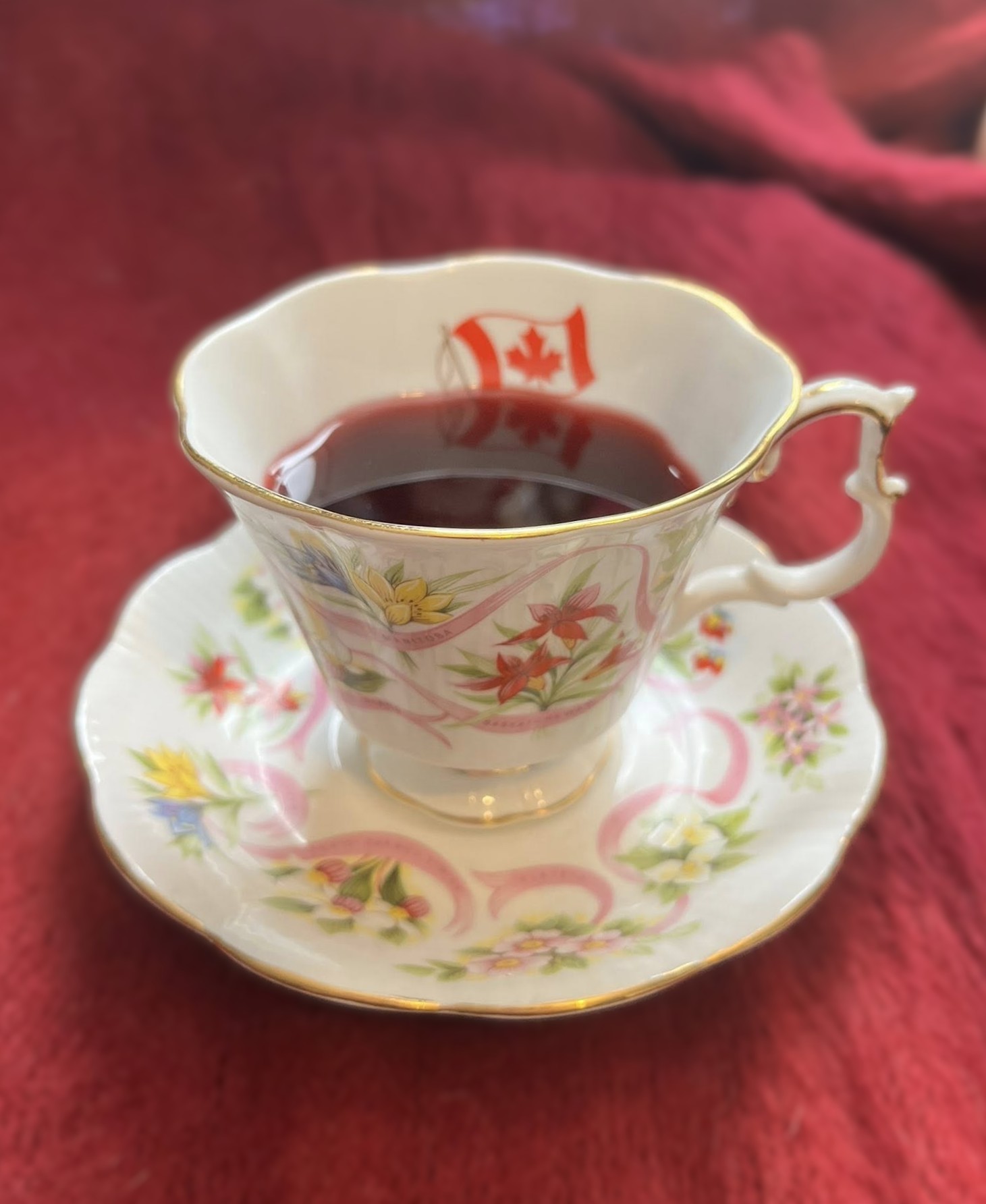
I think most of you know that i collect teapots and teacups, and maybe some cookie jars and bean pots and rolling pins among other things 🙂 I just adore this teapot found by DH at a second store this past winter, it has all the flowers from different Canadian Provinces on both the plate and around the cup itself with a Canadian flag inside. I did a little research on it and here is what i found
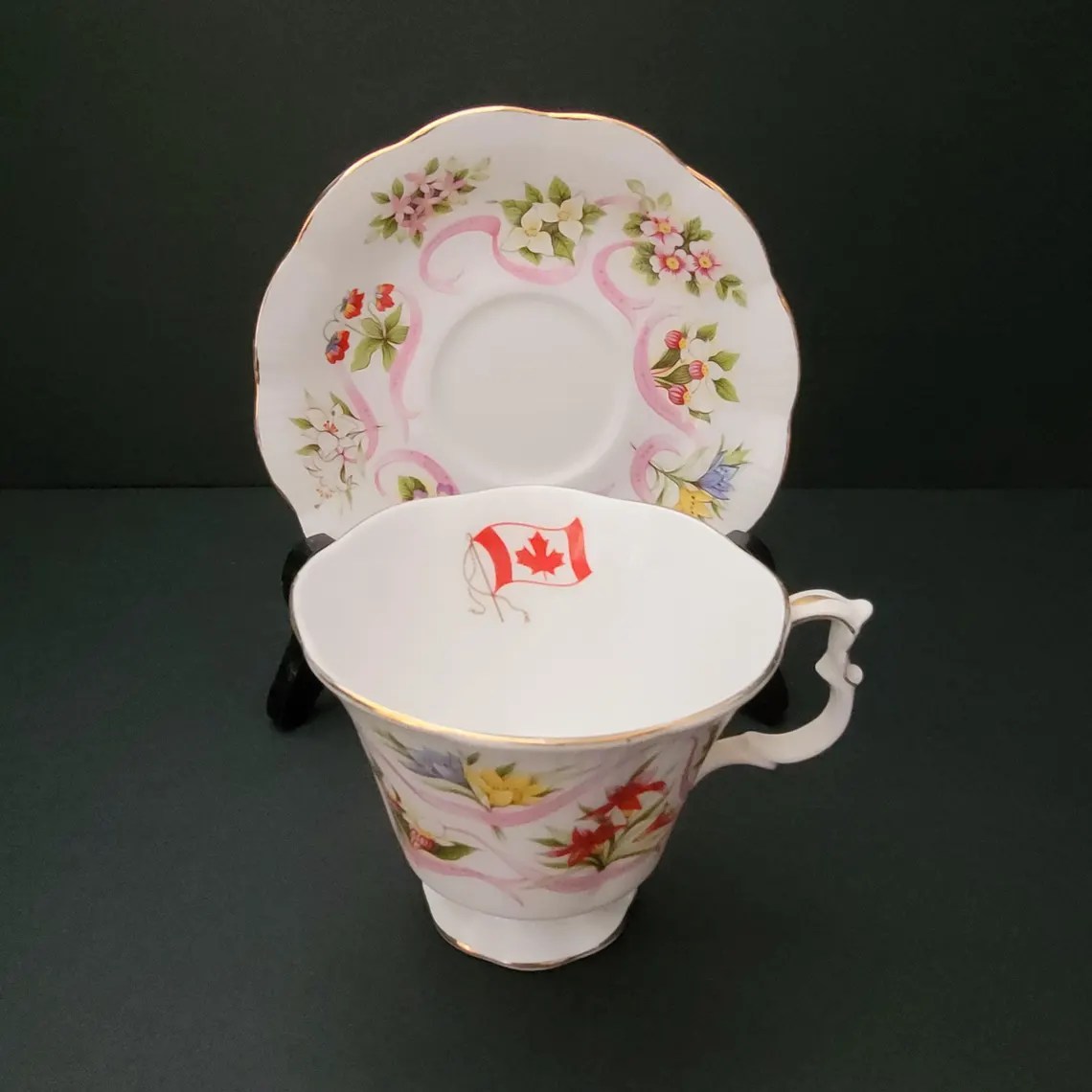
Royal Albert “Our Emblems Dear” Cup and Saucer, Canada’s Provincial Flowers Gainsborough Shape Made in England, Released in 1980’s
What is your province or states flower, I have always loved my Alberta wild rose and i still grow Alberta wild rose in my Ontario gardens but i do adore a number of the other provinces flowers as well Do you have a favorite tea cup or mug with flowers on it? if so what are yours?
How Much Hibiscus Tea Can You Drink in a Day?
- For Adults: 2-3 cups (480-720 ml) daily is considered safe and potentially beneficial for most healthy adults.
- Maximum Safe Amount: Limiting consumption to no more than 4 cups daily is advisable to avoid potential side effects.


 Just another Day on the Farm