
In fact, snow does contain nitrogen and other particulates like sulfur, which it collects as it falls through the atmosphere, however so do rain, sleet and hail, and believe it or not, lightning. Rain and lightning contain more nitrogen than snow. Statistics from agricultural studies estimate that as a result of snow and rainfall averages, between 2 to 12 pounds of nitrogen are deposited per acre in the U.S. per year.
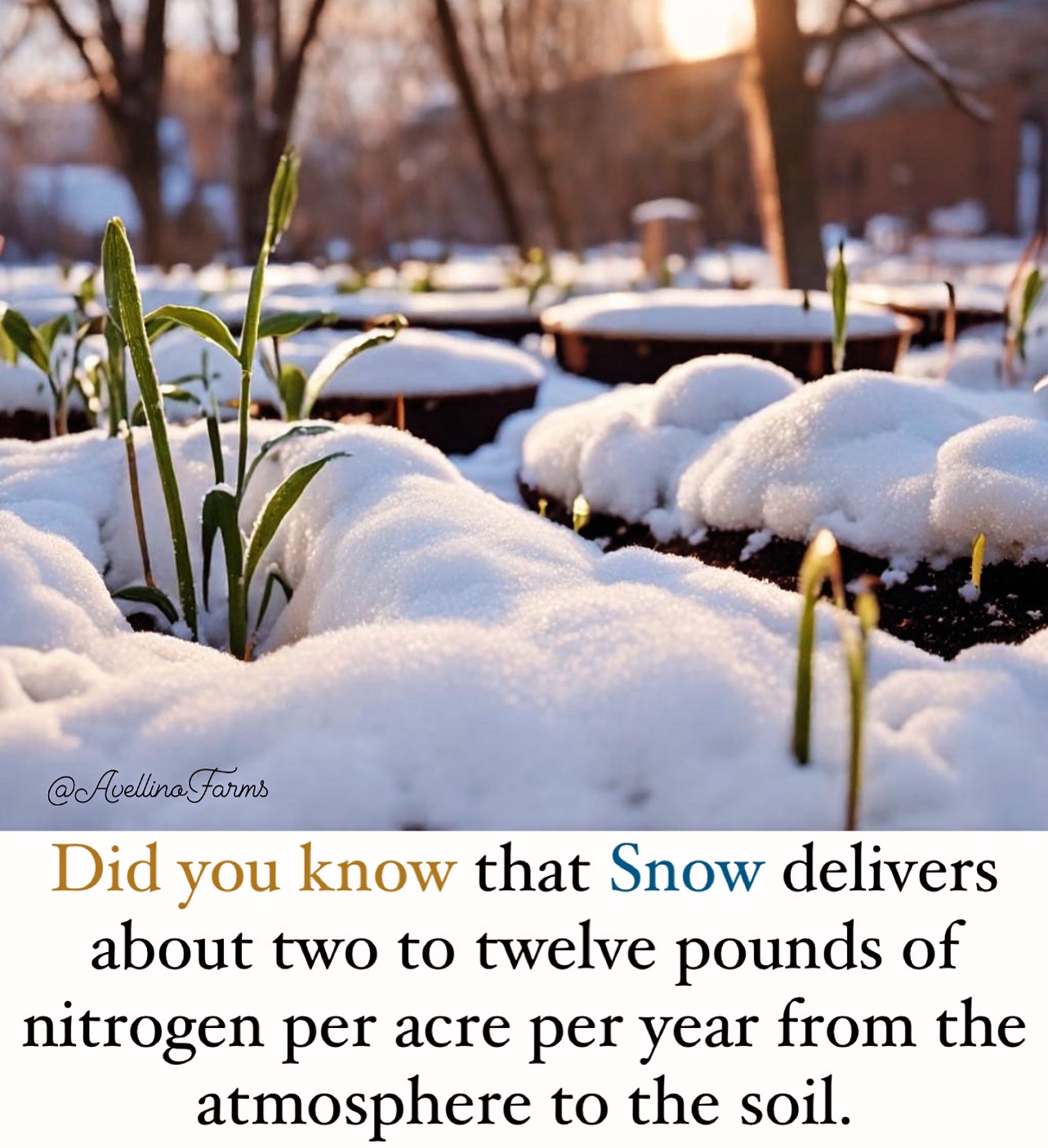
According to Jeff Lowenfels: “There is something else that happens when it snows: nitrogen is deposited by the snow and absorbed either into the soil food web residing and active at low temperatures or by plants as a result of nitrogen fixation, a microbial activity which, astonishingly enough, can take place even at low temperatures.” https://www.adn.com/our-alaska/article/blanket-snow-poor-mans-fertilizer/2008/10/09/
I can not for the life of me find any data on this in Canada? I have to assume that the yield tracked in Alaska snow would be on par with snow in Canada. If by some magic you have data on this from a Canadian source, please let me know i would love to read it.
While you are clearly going to have issues with this working if the ground is frozen solid and then you get rain like you can in warmer parts of garden which include some of the best growing areas, the truth is that MOST of canada’s more marginal lands will and do get on average a good coverage of snow.
My farm for sure always gets a good amount of snow cover, often much more then other folks around the ottawa valley. We have all had a bumper drop of snow and most likely more on the way, one of the best ways to use this is to put your cleared clean snow onto your garden beds or around plants for extra coverage.
Now I am not going to put to much extra snow on my South facing early beds, because we will just be shoveling it back off as that is one of the things i do in early spring a trick i learned up in the north, remove the snow pack and cover it for solar heat collection and you can get that one or two early EARLY beds planted in greens much faster indeed.
However, there are some fruit trees/bushes and or other areas of the garden that would like to break dormancy later, some of have been planted in mid-shade or with wind breaks to help push them to a later spring timing in the hopes of them missing the first frosts and me losing crops, other areas in the gardens are just later planters in the years plan and they are prime areas for putting extra snow on as it will take longer to melt out.
So its worth taking a note on this, as fertilizer costs rise and as peaple get more and more frugal that for those that garden in a northern climate you are getting 2 to 12 pounds of nitrogen per year and the more snow you have the better the delivery system and the better the odds of keeping it in the place you want, a nice steady slow melt out in the bed is ideal.
For those that have covered beds, this is something you are losing out on, for those that are inground gardening, this is a bonus indeed.. For those that need to move that snow and garden.. its a good thing indeed to keep in mind.


 Just another Day on the Farm
Wow. Who’d’a thunk? 🙂
i know right
Pingback: Is snow really “poor man’s fertilizer?” – The Garden Professors™
Pingback: Is snow really “poor man’s fertilizer?” – Better Gardening Tips