Name those Piglets: Muppets Names Please! I need Eight of them!

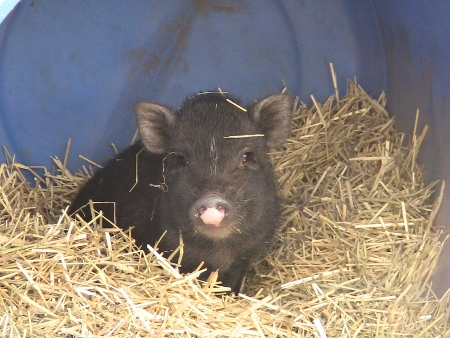
Miss Piggy’s little ones need names, and while you would think that with them being all black that you could not tell them apart but as I spend more time with them, I am being able to figure out markers for each one, I have not stressed them by sexing but will update on that soon.. So I need eight names for the little tikes,  please remember that while getting names, none of these are planned hold backs they are all planned for sale or freezer camp (just being honest here guys)

Looking forward to hearing what you all think..

Posted in Life moves on daily | 6 Comments

Wordless Weds Photos..


Posted in Life moves on daily | 5 Comments

Farming While Sick..

We all know that old saying, if you are sick, get thy to bed and rest.. and that’s wonderful if that is a choice you can make, but what about if you are farming.

Maybe three times in eight years I have had a day that I was sick enough that I truly could not do the farm and DH stayed home from work or worked from home to look after me and the farm.. its a very rare day that I can’t manage home alone and the farm even while sick..

So here are a few of the different and in some cases very common things that I do to give a helping hand in regards to being sick and running the farm at the same time.

1st thing to do is a list, write down what has to be done that day, don’t think that in your fuzzy headed ah, that you will be able to remember if you did this or that because the first thing to do when sick and running the farm is break up the chores. This means that you have to use that list, because you don’t want to forget anyone, and yet it will allow you to take rests and naps in between.

So lets say on a typical morning round of chores, you are going to let the hounds out for morning potty time, feed the cats, water the cats and hounds, feed the hounds, back outside to let them run around, get dressed, haul water for the pasture, haul water for the barn, feed the barn critters, come back up, water the birds, feed the birds (doing all the pens), water and feed the rabbits and then comes extra’s, do you grooming, do you train, do you free range the birds, do you need to haul bedding, is it the day to clean a pen, or is it a good morning to wash the water buckets out, or hit the garden next etc.

Now that’s all well and good when you feel well but what about when you are really sick, trying to do all of that at once is enough to make you want to cry, that list is needed..

So the first thing on that list is to drop any and all extra’s, if you need to clean out the area around the water bucket, not that day, throw down some extra bedding and let it go for a few days while you deal with being sick, if the bucket is really dirty, ok, give it the scrub but if not, rinse it out and just refill that day..

Know who can be moved in that list, example the rabbits self-feeders hold two or three days worth of food, and their water dishes are the same, they get done daily but I know that if I move them from the morning chores to after lunch chore time, they will not suffer for it at all.

The pasture critters are a good example, depending on the time of the year, if they have pasture, and can self-water from the pond, them getting their extra ration is not very high on my list, yes it will get done but the pigs that can’t self-water will get put alot higher on that list as they can’t wait, and while down there, you might as well do the feed, but having said that, you don’t have to do the second round trip to give them the slop bucket, it can wait, they are watered and feed, the slop bucket can wait for the next round.

Break those chores into must do’s, example, hauling water is a must do, but feeding at the same time as hauling water is not a must do, you can haul water, come into the house, rest, have a tea, even have a hour nap, and then get back up and haul hay and do the feed on the second round.

If I am really sick I have been known to break it down per critter on each round, the other thing to remember when working is layering and mask’s, if you already got your lungs weakened by the cold, wear a mask so that you are not breathing in hay or straw dust,  As for layers, yes, if you are already running a fever, the work will make you sweat more and you will want to remove layers, remember that as soon as you stop, you can get a chill and it will make things worse, so keep your layers on or only remove what you have to, and change your socks when you get into the house each time, never wear damp socks while sick, what you would normally throw off while being well, will just make things worse when you already are under the weather.

Make a big pot of soup, whatever kind you like but something that will feed you for days for lunch and supper, and for me at least, I like to make a eggy pie for a easy breakfast if I don’t want soup (I like hot soup for breakfast so most time will have that), the eggy pie is one that makes its own very thin crust, its made out of eggs, milk and a bit of sugar, its really very much like a custard) and its heathy and very easy on the tummy, its excellent cold, so once made it can be used either hot or cold.

Learn your body, after you have a sleep and get up, how long do you typically have before you start to feel really bad again, while it might be great to call and talk to your mom, if you know that are at this stage in the cold or flu only going to be good for half an hour or an hour, the next round on the list has to come first.

Housework, some things can slide and others at least to me should not, keeping the bedding and the pillow cases clean should be on the hit list, if nothing else, change the pillow case daily, if possabe, try and get fresh air and sunshine into the bedroom and the whole house.

Now this is a me thing but when I don’t feel good, I love to simmer vinagar and spices on the stove, it may not do anything health wise in terms of cleaning the air but it helps my nose and I like the way it makes the house smell.

And I know this one seems like a silly thing to say but watch your hands -Lots, If you are already dipping down in terms of your immune system, and you are working with animals and in barns etc,  Wash your hands well and often.

So how do you figure out how to do your day when you are sick and home alone on the farm? Do you just do it and then go back to bed, or do you stagger things out and rest inbetween?

 

Posted in Life moves on daily | 8 Comments

One Day Old, its the baby piggy show, now playing in the Big Barn.

Full Credit of this list of things that I am currently thinking about goes to Sugar Mountain Farm, I love this blog when it comes to pigs! They Rock!!

http://sugarmtnfarm.com/2007/02/01/piglet-interventions/

I have cut down the different parts into smaller and shorter points, to read the full, please see the above link..

Toweling & Iodine

– Some people towel off and iodine the umbilical cord of new born lambs, piglets, etc.…

Well, this is kind of a moot point really, Miss Piggy did it all, she birthed them, cleaned up the pen and I arrived to live active little piglets, I did freshen her bedding with more wood chips and I did add more hay to her bedding area, she nibbles on the hay when it first arrives and gets the good stuff she needs because she is not grazing on pasture and then she moves it around by snout or mouth and uses it as sleeping bedding afterwards, As I believe that the deep pack is the best choice possable for both her and the young ones, I won’t be cleaning it out other then the bathroom corner. Clean bedding and healthy normal piglets, no need to treat the cord.

Heat LampsWe haven’t done this. My biggest reason for not doing it initially was fear of fire. . An open shed with its back to the wind, a deep bed of hay and their mother is what they really need. For the new born piglets, their mother’s body heat is key – she’s 103°F.

This one is a bit more of a worry for me, I don’t want to use extra heat source, first because I took the barn off power and would have to have some rewiring done in order to safely run a heat lamp in the barn itself, not my idea of a good time, now at the moment, the piglets have two walls with their sleeping bedding area in front of it, with a front blocked half way, no drafts and lots of straw/hay bedding mixed with wood chips and their momma to boot, I also placed a large plastic tote flipped on its side and stuffed with bedding that they can choose to go into to sleep in as a huddle to have a much smaller space to heat up, I also blocked off most of the windows that provide fresh air, the air is still coming in other windows and the door of the barn as air is key but I don’t want a draft on the litter either. So far so good.

Cutting Deedle TeethWe don’t cut the needle teeth on piglets. The reason I’ve read for doing it is to prevent damage to the sow’s teats and to keep the piglets from hurting each other when they tussle. I’ve only seen a cut on one teat on one sow in our herd of thirty so I don’t think this is necessary. It would be a lot of work and I could see it causing problems for the piglet when teeth are broken (cut). The only damage I’ve seen from biting is suckling on tails and cutting needle teeth (fangs/tusks) would not help with that – suckling is done with the tongue and upper front teeth which are not the teeth being clipped.

This one is a easy answer, if cutting the teether does not help, then I’m not doing it, I  know that Miss Piggy, her mother and Grandmother didn’t have theirs done, and I know that Angelo and his siblings didn’t have theirs done either, both breeders didn’t believe in it and I saw a good number of large black females that were nursing and none of them had any issues on their teats, I checked out Miss Piggy mother quite closely and she seemed healthy and normal, so for now, I say no and will report if I needed to change my mind on this one.

Tail Docking

– This is done in confinement situations (e.g., factory farms) for pigs to prevent tail biting in grower pigs. I’ve not seen this behavior with our pigs to any degree that I would think it necessary to do.

This one is so easy for me, No, both my Large Black pigs have their tails, they use them and I see no reason to dock given the room and space they all have, I don’t see it being a issue.

Vitamin Shots

– We don’t do do this one either. What I have read is that pigs kept on concrete need the shots or they need to be fed fresh greens. Sounds like a dietary issue. Our pigs are out on pasture where they get plenty of greens and sunshine. During the winter they get hay which replaces the pasture. Pigs, unlike people, make their own Vitamin-C. A healthy diet is better than a shot of vitamins.

I am not planning on giving a shot to them, I will make sure they get fresh air, direct sunshine, hay(as its fall/winter time, so pasture is not a real choice at this time) and as full and healthy of a scape kitchen pail as I can manage, O how I wish Girl was freshened, I would love to be able to feed the piglets fresh skim milk and whey from cheese making. Next time..

Mineral & Iron Shots and Supplements

– Another thing we don’t do – pigs are very good at getting the iron and other minerals from the soil, if you let them. If you are raising pigs on concrete then give them a shovel full of good dirt and that is enough to give them what they need. Personally, I suspect the pigs prefer to root than have you shoot them full of supplements.

I wil be giving them access to dirt and am more then willing to bring a shovel full into the current pen, but I also do feed a ration that has these, something that the person at there farm does not, they have access to leftover milk from their local dairies (in the states) and so they need alot of yogurt or clabbor, something I can’t do.

Vaccines

– We don’t vaccinate the pigs. I do believe in vaccination as preventative medicine.

I will check with the vet on it there is anything I need to worry about but when I asked about my own, I was told if they were healthy and had no issues, then I didn’t have to, and I expect that will be the same choice I make for the piglets but I will still check as its been over a year since I checked last.

. CastratingNot if I can avoid it. the taint, which is “due to the presence of h
igh levels of androsterone and skatol.” One key the research talks about is that slaughtering pigs at a young age, the normal market weight of around 6 months, means they don’t have high levels of these chemicals and thus no boar taint. Pigs are normally slaughtered then so castration may be unnecessary at normal market sizes.

This is a touchy one for me, I need more time to think about it, I don’t know if my lines typically have it or not, I have been told not, but that’s just talk..

I would perfer not to, but that means that I need to make sure that the boys are butchered out at a younger age then the girls, and the second question is will it effect the sale of weaner piglets or not? or farm gate sales or not?

Open to thoughts and comments on the altering question?

Posted in Life moves on daily | 2 Comments

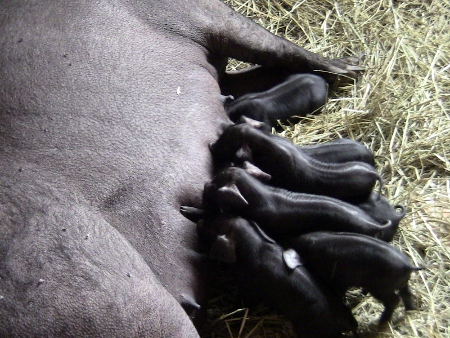
Miss Piggy’s new litter all lined up in a row nursing and Video link..

As you can imagine, I am checking on the new wee ones pretty regular, in fact I am pretty sure that the cows and horse are trying to figure out what those little babies are, as they are often found with their big old heads hanging over the half way on the front of the pig pen, seeming to be watching what is going on..

Want to see them live and have higher speed.. here is the utube video of the wee ones..

http://www.youtube.com/watch?v=gUu6VY_bAEo&feature=channel&list=UL

Posted in Critters, Life moves on daily | Tagged , | 4 Comments

WordPress is not posting correctly but will try again.. Miss Piggy News..

I am going to keep this short and sweet in case it does not post, but this morning, Miss Piggy was laying down quietly when I arrived, something that never happens, and there was momma with eight live little Large Black piglets nursing away! Way to go Miss Piggy!

They are so little! but already so piggy in all their actions and behaviour, its just so cute!

Posted in Life moves on daily | 5 Comments

Next leg in the trip for DH- Out to Dad’s Farm!


Posted in Life moves on daily | Leave a comment

Happy Birthday Dad!!

Wish I was going to be there on the weekend at the party when a number of you celebrate your birthdays! Can’t believe you turned the big 65! this year, where has all the time flown by.. May you enjoy the weekend filled with your son’s, and grandbabies, I hope you and Dh get to spend some good quality time on the farm (enjoy the quading time!)

We may be different, but in many ways we are the same, but know this.. I love you and wish you the best always!!


Posted in Life moves on daily | 3 Comments

Small Farms, Local Butchers and 100 Mile Food..

Wow, I lost a whole lot of that post, and I don’t know why..hmm, sorry the jump in it, i had a intro.. I swear.. let see if I can track it down or re-write it.. odd..

Can’t even sell them to you to have you butcher him at home, because legally you need to keep all new livestock on your property for a full 30 days before self-butcher is legal.

So where does that leave me, it leaves me self-butchering high quality meat and not being able to share or sell my chickens, ducks, rabbits or turkeys with anyone..

It took me hours on the phone and traveling to different sites to see them with my own eyes to find my local butcher that will do my sheep/goats/pigs and beef, and I know that wonderful family run butcher is in fact looking to sell, as none of his boys want to take over the family business, so its only a matter of time before either a) it sells b) he retires c) one of the boys changes their mind.

I can’t be the only one that has hit these road blocks time and time again.. how many others are there like myself, where we realize that its easier to just keep different breeding programs at the self only stage..

I have more then enjoy room to raise an extra 5 turkeys or geese or ducks for friends and I know I have the market to do so, but I can’t find the butcher to make it happen in a legal manner and I won’t take risks, if I am going to do farm sales, it will be done following the law period.

So I know that when I see those “small” farms locally talking about raising bronze turkeys, I know a few things, a) they had to have ordered them and got the correct paperwork  b) they sent them to butcher at one of the two huge butcher plants that will take them, only one would fit into the 100 mile rule and let me tell you I have gone and looked at it, and there is nothing small or family run about it.

So perhaps its true that the birds had a great life on the farm and the person paid though the nose per pd for that pasture raised bird, but the buyer still helped support the large hatcheries and the large butchering plants..

Still better then buying from the store right? I agree, it is!  But there is so much more to it..  how was the feed grown, how was the bedding harvested or grown, is it covered in sprays? How was the wee ones hatched, where they debeaked? Where they allowed to eat normal amount or were they feed 24 hours a day to have them grow as fast as possable? How was they transported to the butcher themselves, have you seen those bird crates? and the list goes on..

How many birds does a farmer need to raise before you don’t consider them “small or family” in ontario we have a few laws that can help in this way, you are allowed to raise up to 300 hens in ontario or up to 50 turkeys without needing qouta’s, fair enough but did you know that in alberta, you can raise and sell up to 2000 birds.. still think both of those are in the same small farm areana?

So I guess I will leave it at that.. what defines your own veiw of small farm..

Posted in farm | 7 Comments

Beef Recall, Food Handling and Vaccine for the cattle..

Have to admit that I am torn on this one, I am in fact pro treatment, I do vaccine for a few things on my farm and for different critters, their health has to come first and given that my land has been used for farming for many, many years I need to treat for thing that could effect the health of my adult breeding animals, I also believe in vaccines for my hounds and purrpots, I don’t believe that they need everything every single year but a full treatment of baby vaccines, long term use of the three year rabies and two or three year ones for the regular ones after they have their full set of baby and first year old..

I still remember the pain and shock at the age of 12 when I brought my puppy home and within weeks it needed to be put down by the vet because it had not been given a vaccine yet, and to see it again in Iqaluit, we took in a rescue puppy and despite flying it to yellowknife for medical care (I knew the vet, and the prices were alot better then sending it to ottawa) only to have to put him down because of parvo.

When I first got Girl, she scoured on me, well more like she came with scours (which is why the farmer who sold her to me would not take any money for weeks, he swore she was fine when he called me but she clearly had it when we went to pick her up, and he would not take payment for a good while as he didn’t want to refund me if she didn’t make it)

Yes, I treated her the old fashion way, super clean bedding, tons of bedding, the best milk replacer I could buy, moved her to many small meals per day, used grandpa’s treatment of beating in a egg into the milk mixture to slow her down, made sure she was totally draft free but also had lots of good fresh air and I also treated her daily with the recommended meds for her age and weight

Would she have pulled though without them, most likely, but I personally think its foolish to have only gone with the home done things and have a harder/slower/longer recovery period, instead I used everything! I could to make sure she recovered as fast as reasonable.

So when we are faced with the latest heavy duty beef recall, and there is a clear vaccine that appears ? to have the studies to back it in terms of being able to reduce this, why is it not being used.

I will be honest here, given my very! small herd, and the fact that I perfectly comfortable using a year or two to compost out my manure, I don’t see any reason to use this on my own cattle, having said that, looking at it from the idea of a feedlot, would it not make sense to just demand that the beef produces that want to move their cattle into those feedlots have to have vaccine done before they are sold into that, and the feedlots do their second ones before they go to slaughter..

If the vaccine can truly reduce the numbers this heavily and then the federal plants process don’t or won’t have “high level days”

or is this just the fact that folks have also truly gotten slack on the required cooking and cleaning process in regards to food safety in the kitchen.. When I was a child, no one would have thought to serve steaks raw or pork still lightly pink or a number of other things I see folks doing now without a thought..

Food Safety News Release

Bioniche E. coli O157:H7 Cattle Vaccine Authorized for Field Use in Canada

22/12/06
BELLEVILLE, ON, December 22, 2006 – Bioniche Life Sciences Inc. (TSX: BNC), a research-based, technology-driven Canadian biopharmaceutical company, today received authorization from the Canadian Food Inspection Agency (CFIA) to distribute its E. coli O157:H7 cattle vaccine to Canadian veterinarians under a Permit to Release Veterinary Biologics as specified in the Canadian Health of Animal Regulations. This authorization equates to what is referred to as a “conditional license” in the U.S. This is the first vaccine technology for control of E. coli O157:H7 to be authorized for field use by a regulator globally. The vaccine is indicated for the reduction of shedding of E. coli O157:H7 bacteria in cattle.

“The Bioniche E. coli O157:H7 vaccine, developed through a partnership with the University of British Columbia, the Vaccine and Infectious Diseases Organization (VIDO) at the University of Saskatchewan and the Alberta Research Council, is a world’s first,” said Graeme McRae, President & CEO of Bioniche Life Sciences Inc. “Bioniche believes that this vaccine will be an important factor in helping to reduce the prevalence of this toxic bacterium, first implicated in meat contamination and now being increasingly identified as a contaminant of produce. CFIA’s approval gives the Company a clear and manageable pathway to full licensure.”

In order to progress from a Permit to Release Veterinary Biologics to a full license, the CFIA indicated that Bioniche must provide additional data confirming reduction in E. coli O157:H7 shedding by vaccinated animals. The Company believes that this requirement will be met in 2007.

“This vaccine will ensure that Canadian cattle producers continue to provide a safe product for Canadian consumers,” said Dr. Lorne Babiuk, Director of the Vaccine and Infectious Disease Organization (VIDO) and Canada Research Chair in Vaccinology and Biotechnology in Saskatoon, Saskatchewan. “More importantly, the reduction of E. coli shedding into the environment will have far-reaching consequences regarding environmental contamination. The recent outbreaks of E. coli infection from consumption of vegetables is an example of additional benefits of such a vaccine. The key discovery to making this vaccine a reality was made by Dr. Brett Finlay at the University of British Columbia, when he deciphered the mechanisms by which E. coli attaches to and infects animals. Using this knowledge, it was possible to target the specific proteins of the bacterium for use in the vaccine.”

Recent outbreaks of E. coli O157:H7 affecting spinach and other produce in North America have highlighted the fact that this is an increasingly serious human health threat that goes beyond meat (the first major foodborne outbreak of E. coli O157:H7 occurred in 1982 and was associated with ground beef). Human exposure to E. coli O157:H7 is being increasingly associated with contaminated fruit, vegetables, unpasteurized milk and fruit juice, potable and recreational water, and from direct contact with animals at fairs and petting zoos.

Clinical trials have been conducted with the Company’s vaccine over the past four years involving more than 30,000 cattle. Studies have consistently shown a significant decrease in the number of cattle shedding these deadly bacteria in their manure. In a controlled experiment conducted at VIDO, vaccinated cattle were challenged with a very large dose of bacteria, and there was a reduction in the magnitude of shedding by 99.47%. In clinical trials conducted by the University of Nebraska-Lincoln in commercial feedlot settings (where vaccinates and non-vaccinates were mixed), there was a 75% lower prevalence of E. coli O157:H7 in cattle vaccinated with two doses of the Bioniche vaccine. Another three-dose vaccination study was performed by the university, which showed that vaccinated cattle were 98.3% less likely to colonize the bacteria in their intestine.

About E. coli O157:H7

Escherichia coli (E. coli) bacteria are normal organisms found in the intestinal track of all animals and humans. Most E. coli are non-pathogenic (non-disease-causing) to their host, however certain strains can cause intestinal disease and, occasionally, other significant systemic disease. The E. coli O157:H7 bacterium, which was first identified in South America in the late 1970s and drifted northward, produces a powerful toxin (shiga/vero toxin) that can cause severe illness in humans and often result from consumption of contaminated food or water. Today, the bacteria can be found in most cattle herds in North America, South America, Europe and Asia. Ruminant livestock (e.g. cattle) are considered the major reservoir of E. coli O157:H7 worldwide. Numerous studies have demonstrated that the incidence of E. coli O157:H7 in beef and dairy cattle is widespread and that the organism is found in, on, and around cattle in all parts of the world. Use of manure as fertilizer for crop production and run-off from beef and dairy cattle operations are a source of contamination for the general environment, as well as surface and ground water. E. coli O157:H7 contamination of food and water as a result of fecal shedding by livestock is a well-recognized and documented threat to human health.

About E. coli O157:H7 Infection

The U.S. Centers for Disease Control estimates that E. coli O157:H7 infection affects some 73,000 people per year in the United States, and that 2% to 7% of those people develop hemolytic uremic syndrome (HUS), a disease characterized by kidney failure (in recent outbreaks, this percentage has risen to as high as 16%). Five percent of HUS patients die, many of them children and senior citizens, whose kidneys are more sensitive to damage. The annual cost in the United States is estimated at more than $650 million due to medical expenses, lost productivity and death

Posted in Life moves on daily | 14 Comments